You step into a world where bold shapes, bright colors, and playful details turn everyday rooms into lively spaces. This article helps you spot the key elements of 1980s home decor and shows how those ideas can fit into a modern home.
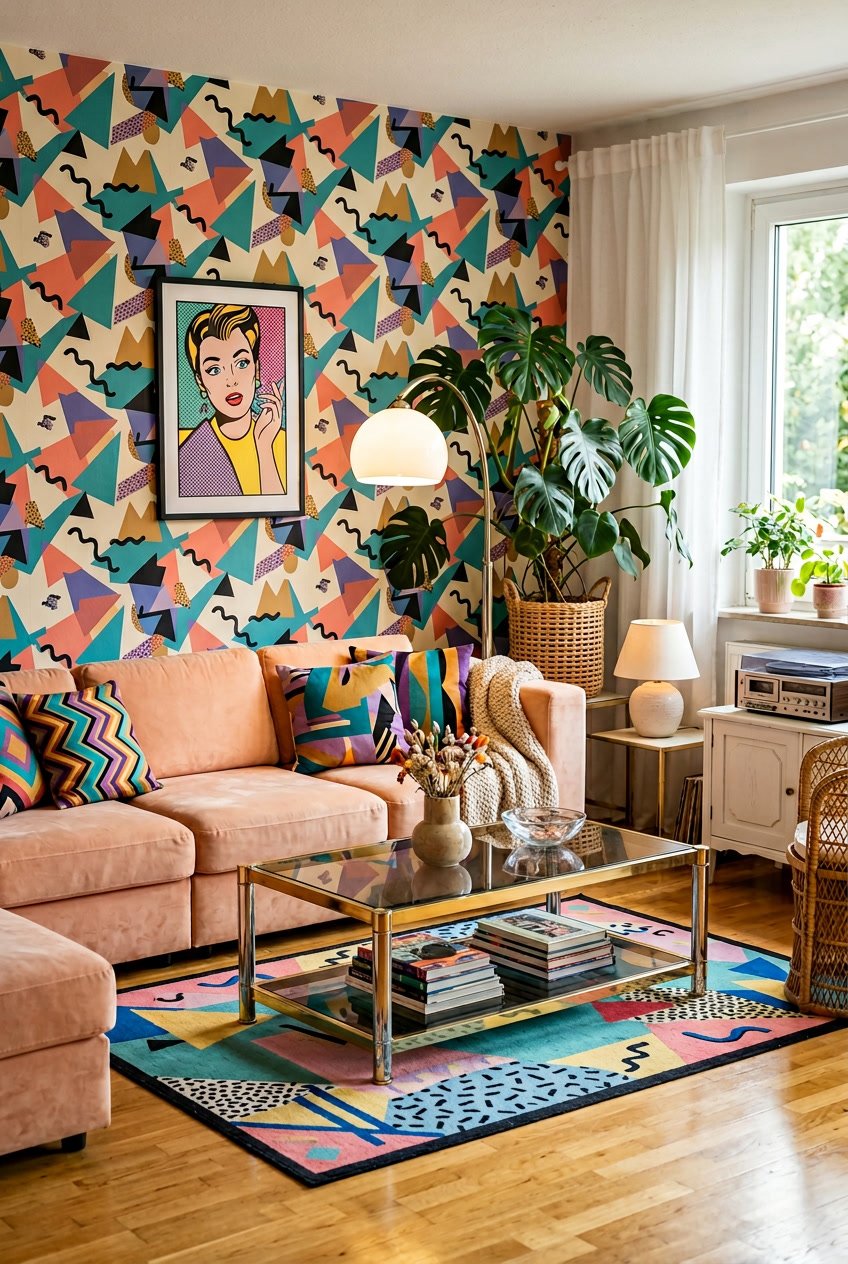
You’ll see which 80s looks add instant character and how to use them without going overboard. Let’s dig into lighting, furniture, patterns, and accents that bring that retro flair into today’s interiors.
1) Glass block walls for retro lighting effects
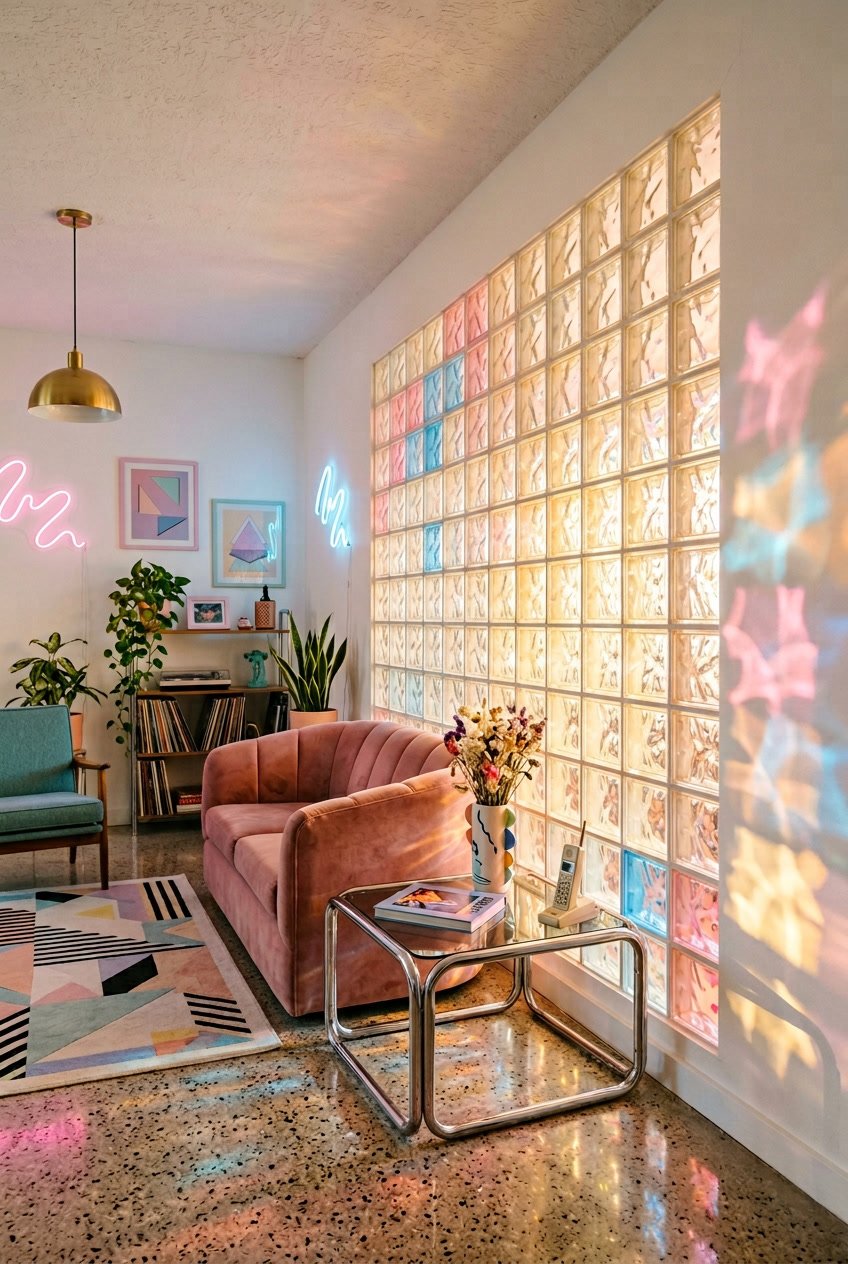
Glass blocks bring back that unmistakable 80s vibe while letting sunlight filter in for privacy. Designers use stacked or narrow panels to create a glow without making things too open.
They soften sunlight, brighten up hallways and bathrooms, and work well with matte metals or wood. The look feels updated, not stuck in the past.
Try them in partial walls or curved corners to carve out spaces. They’re not hard to install, and honestly, they’re pretty low-maintenance.
2) Neon-colored accent furniture
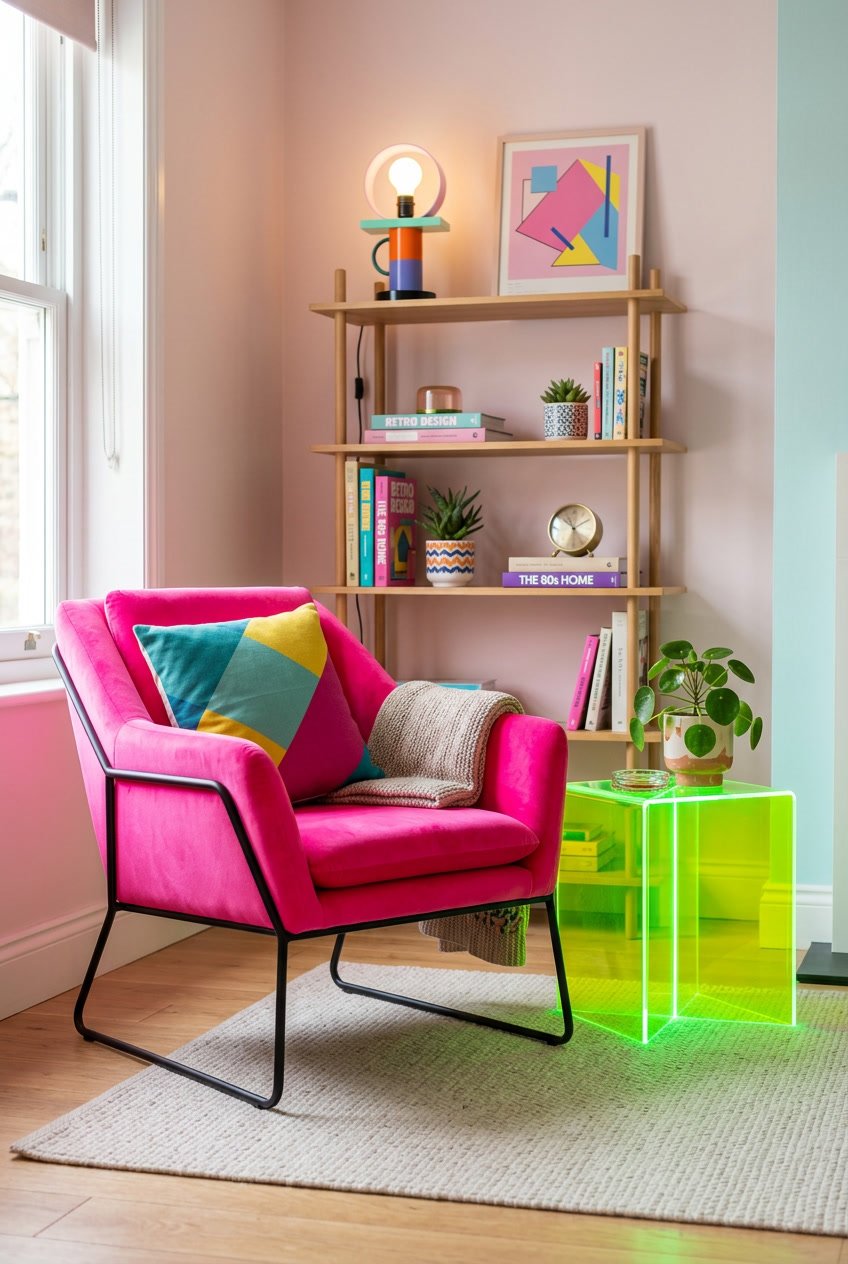
Neon pieces add instant energy—no need for a total makeover. A neon sofa, chair, or side table can grab all the attention and wake up plain walls and floors.
Mix those bright pieces with simple shapes to avoid chaos. Bright seating plus muted rugs or a bit of mirrored shine keeps things feeling fresh, not frantic.
Pick one or two neon shades and echo them in small accessories. That way, the space pops but doesn’t feel wild.
3) Geometric patterned rugs
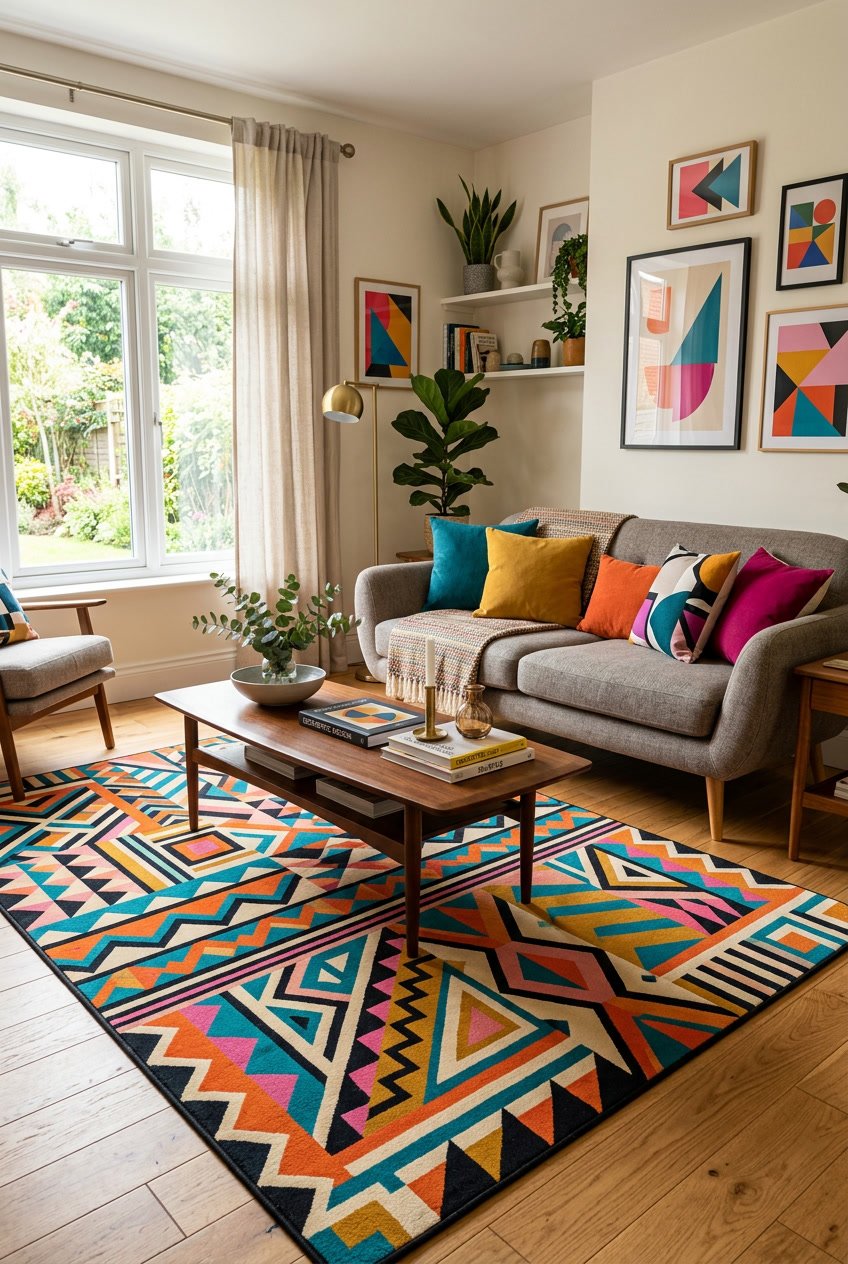
Geometric rugs bring bold shapes and crisp lines—pure 80s, without the mess. Triangles, zigzags, and blocks inject energy and play nicely with simple furniture.
They often show up in bright or high-contrast colors, but you can find muted versions that suit modern tastes. Most are low-pile and easy to clean, which is always a win.
4) Mirrored surfaces and furniture
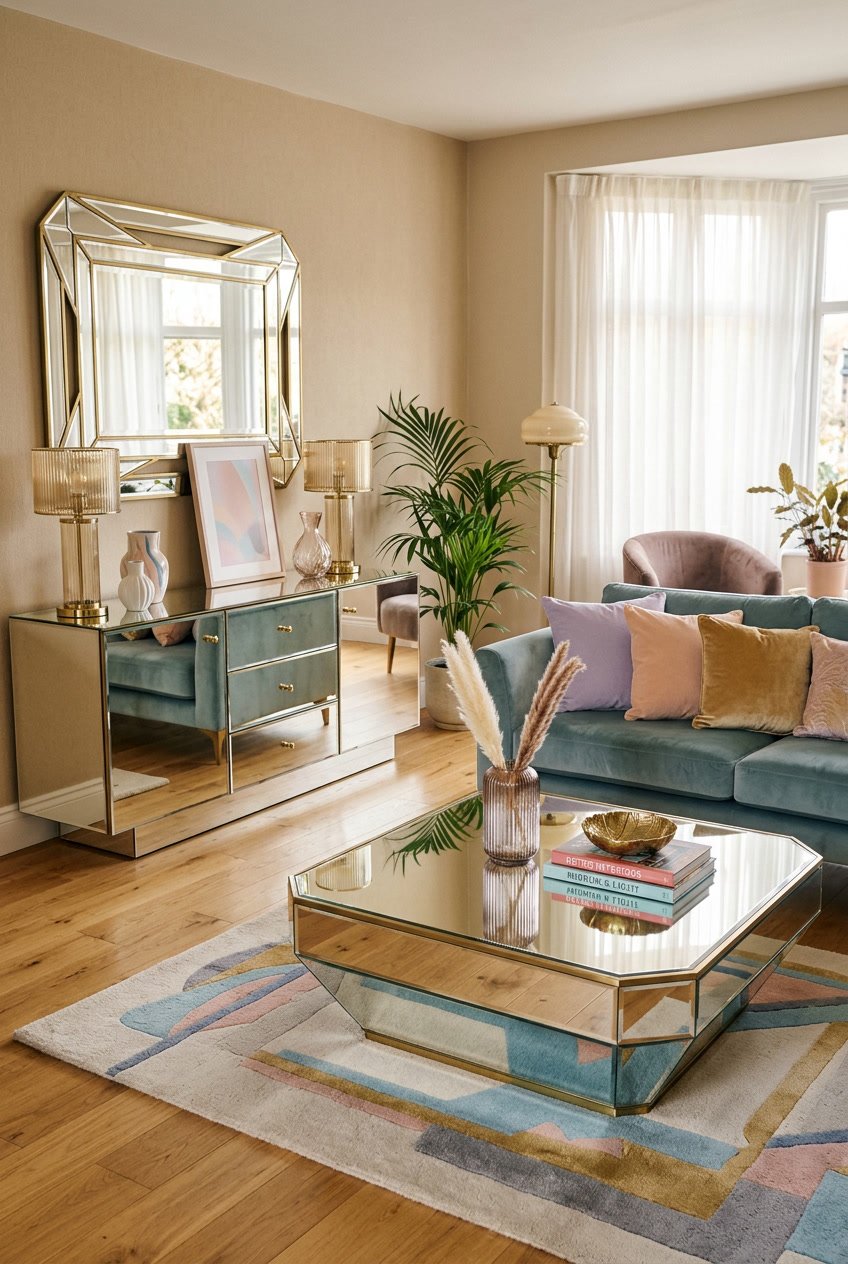
Mirrored surfaces were everywhere in 1980s rooms, bouncing light around and making spaces feel bigger. You’d see them on walls, cabinets, and tabletops.
Designers liked to pair mirrors with glossy finishes and metallic touches for extra shine. Today, mirrored pieces can still brighten a room, but you’ve got to be careful not to overdo it.
Collectors hunt for vintage mirrored furniture for that bold, retro edge. Newer versions usually use smaller mirrored panels for a more subtle vibe.
5) Pastel wall palettes
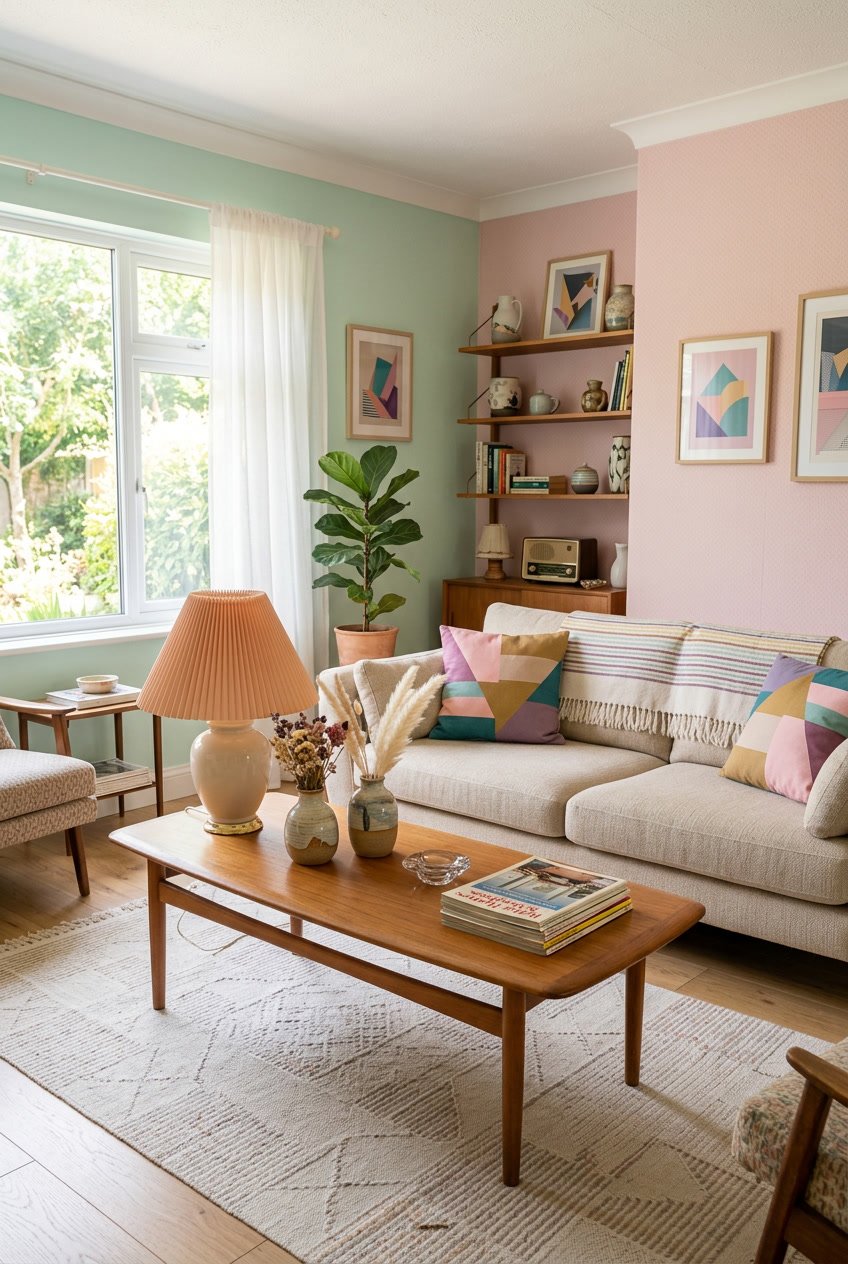
Soft mint, powder blue, and blush—these pastels nail the 80s mood without going full neon. They make rooms feel airy and calm, but there’s still a hint of retro.
A single pastel accent wall adds just enough character. Pair it with neutral furniture and simple patterns for a look that feels balanced.
Mixing two gentle pastels can give a room some contrast. Small touches like pillows and art help tie it all together.
6) Curved and oversized furniture pieces
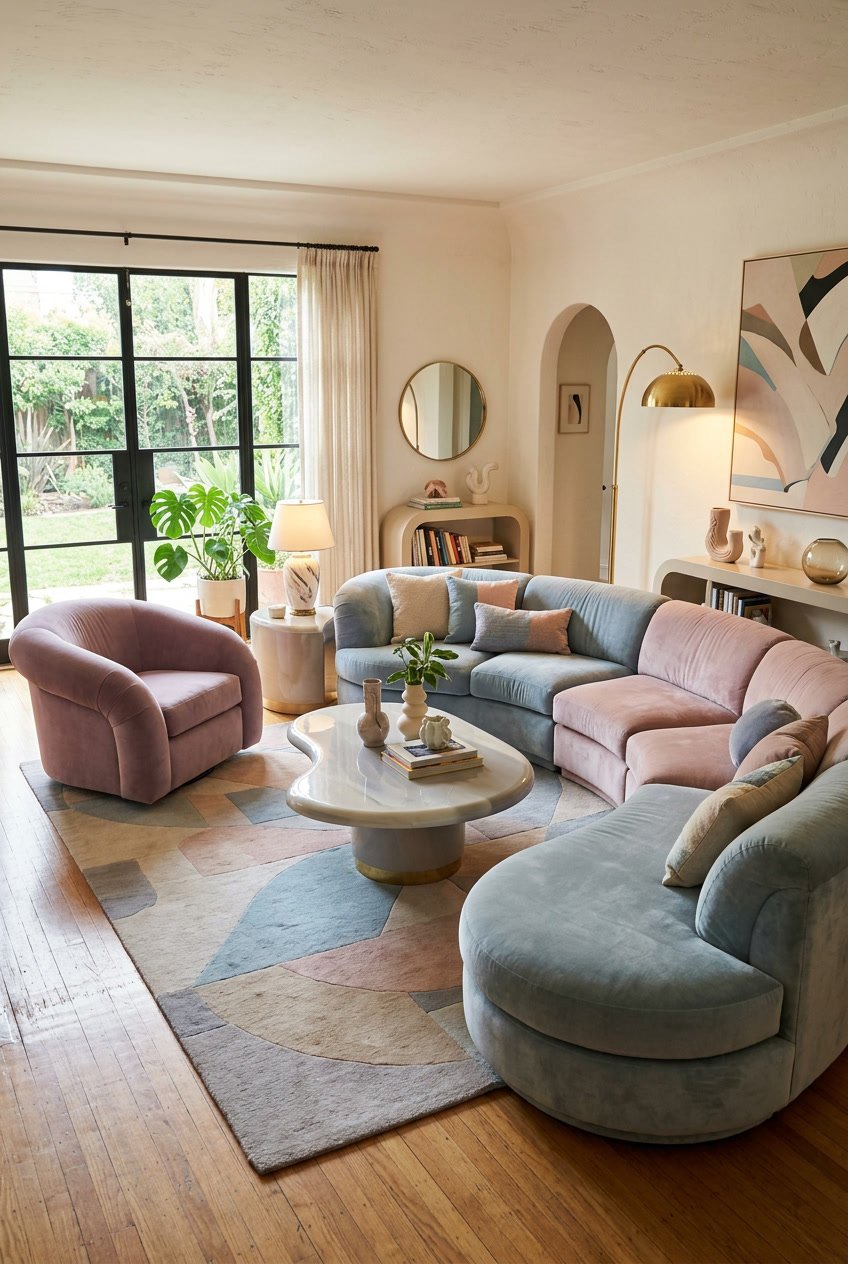
Big, rounded sofas and armchairs were a staple—perfect for lounging and filling out a room. Curved lines and generous size made everything feel soft and sculptural.
Plush upholstery, shiny finishes, and chrome details helped these pieces stand out. These days, designers mix bold shapes with simpler furniture to keep things from feeling too heavy.
7) Bold, graphic wallpaper prints
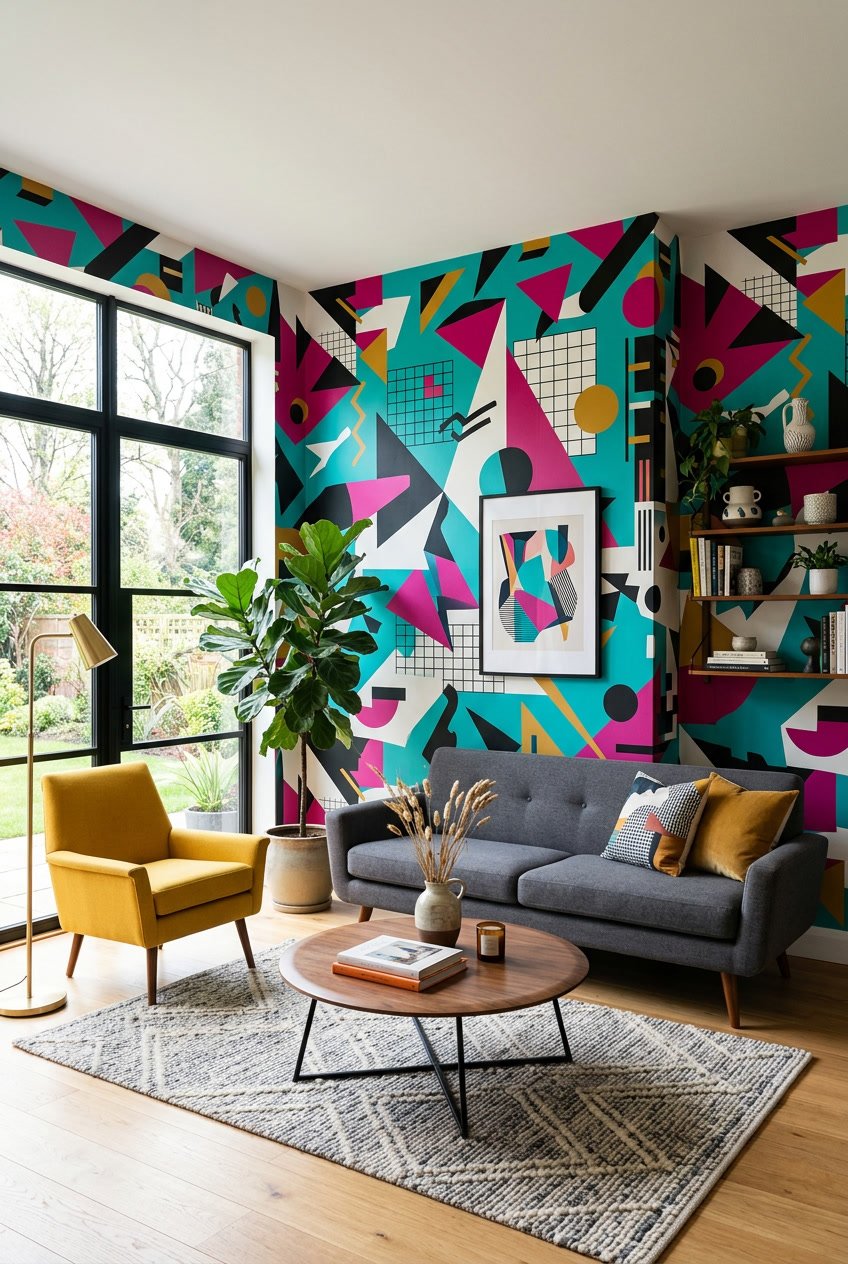
Wallpaper with geometric shapes, neon, and repeat patterns brings instant energy. It’s got that Memphis-style, digital 80s look without swallowing the room.
Usually, just one bold wall is enough. Peel-and-stick options make it easy to try the trend and swap it out later if you change your mind.
8) Memphis style decor accessories
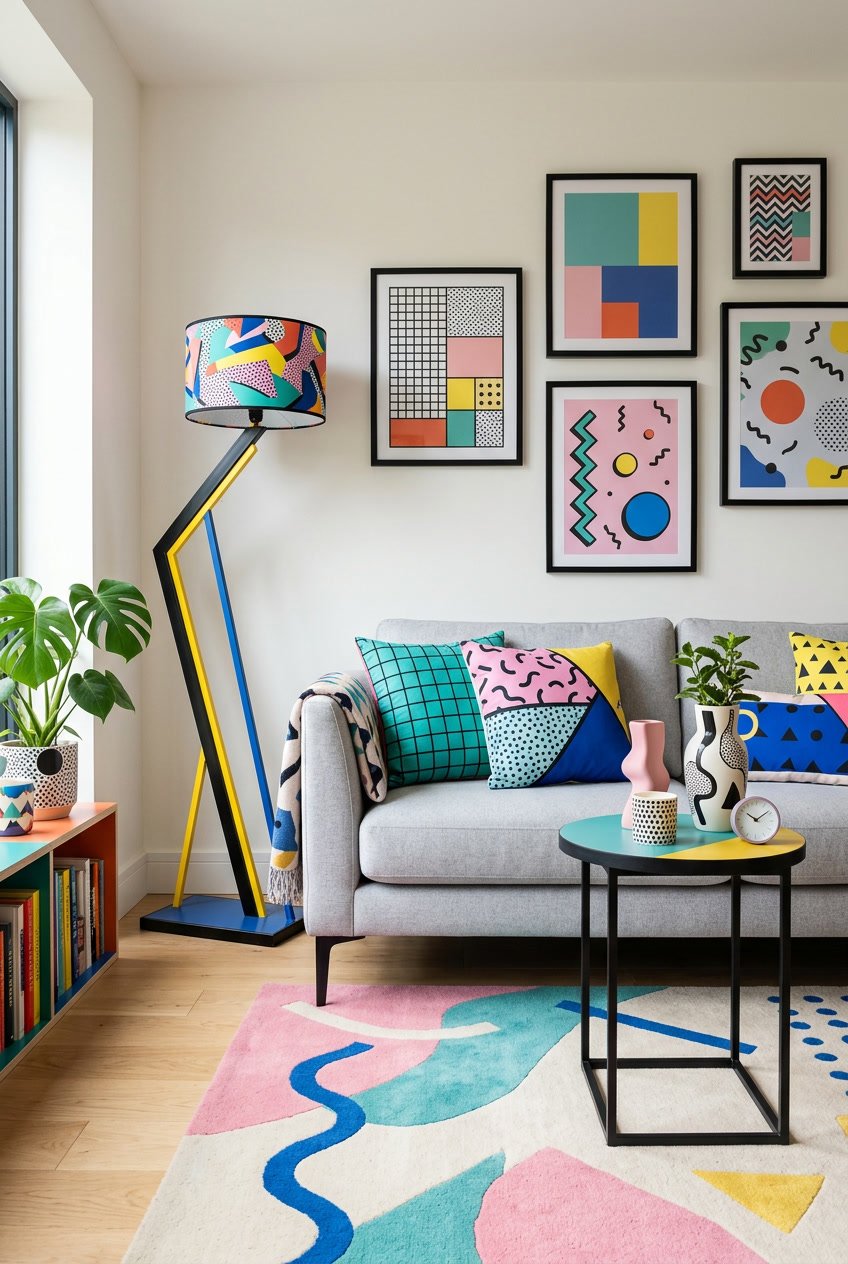
Memphis accessories are all about playful shapes, bold geometry, and color. Lamps, clocks, and vases give you that 80s hit without taking over the room.
Patterns usually have triangles, squiggles, and blocks of color. A bit of metal or glossy plastic finishes off the look.
They’re great as shelf highlights or accent pieces on plain furniture. You can go for one statement item or mix a few for a coordinated effect.
9) Ruffled throw pillows
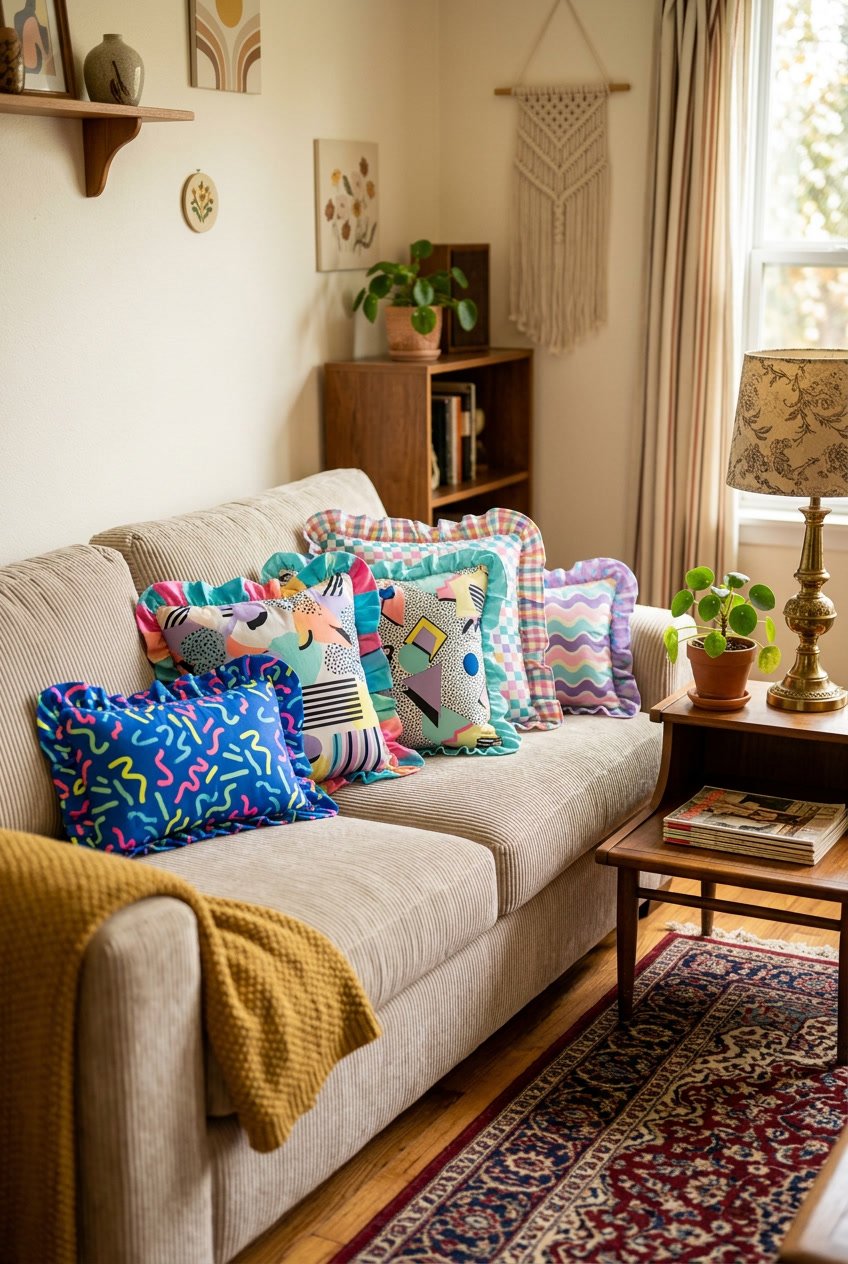
Ruffled throw pillows bring a soft, vintage vibe to any 80s-inspired room. They add texture but don’t take over.
Toss them on sofas, beds, or accent chairs. Colors range from pastels to bold prints, so they fit right in with most 80s palettes.
You’ll find them new or vintage, sometimes with handmade trims. They’re an easy way to nod to 80s style without making a huge commitment.
10) Stenciled wall art
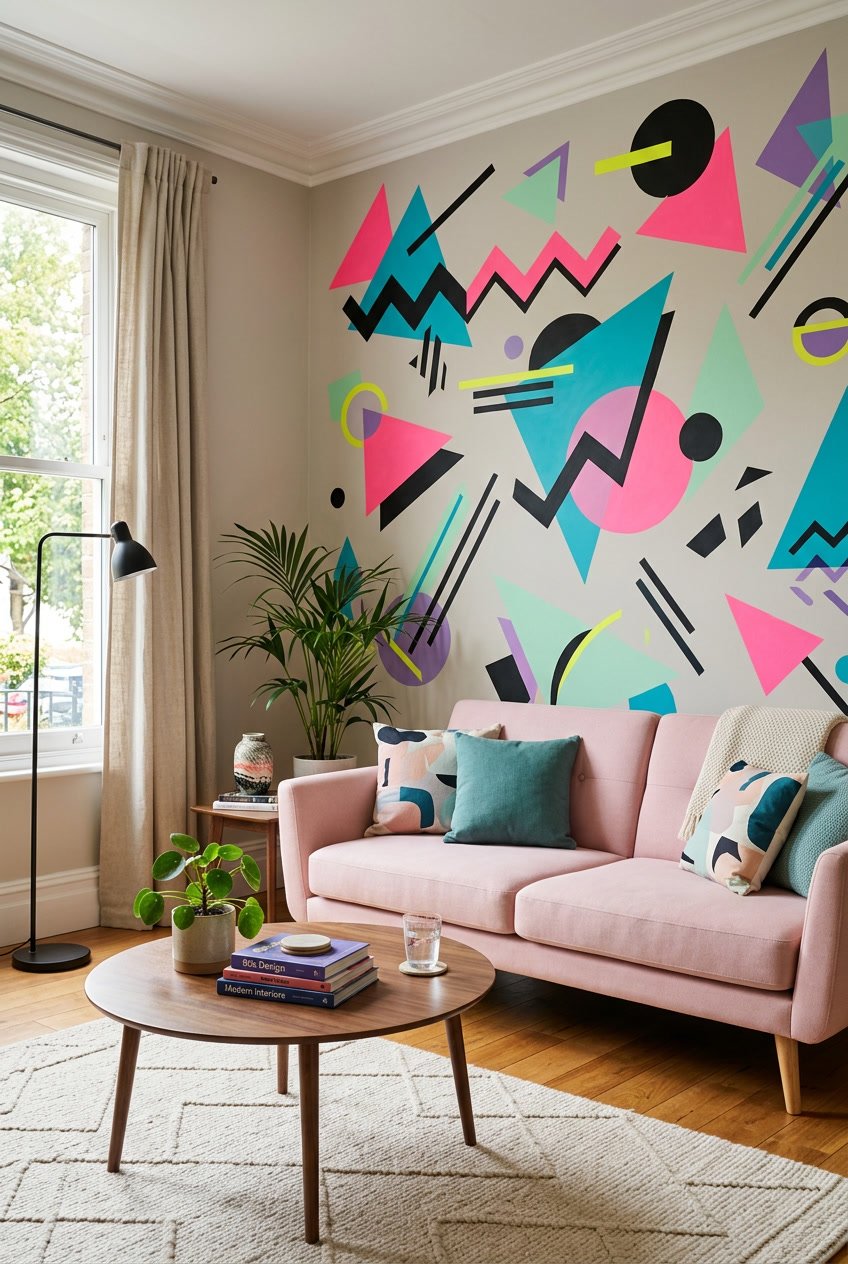
Stenciled wall art brings in those unmistakable 80s vibes—think geometric shapes, bold lines, and a little bit of attitude. It lets you add retro patterns without having to repaint the whole room.
You can grab ready-made stencils, or if you’re feeling crafty, cut your own to fit neon colors or pastel palettes. Stencils work great on accent walls, borders, or even just a small panel if you want a subtle vintage nod.