Home decor ideas bedroom shoppers often hit the same wall: Pinterest-perfect rooms built for square footage you do not have. The fix is not “buy less”—it is buy smarter. The seventeen pieces below are chosen for real small bedrooms and studio setups: they prioritize vertical storage, double-duty surfaces, and zero wasted swing space so you can sleep, dress, and sometimes work in the same quiet zone. Use this list as a shopping brief: mix tiers (bed + wall + slim case) instead of one giant wardrobe that eats your only open floor.
In this guide
1. Storage platform bed with deep drawers
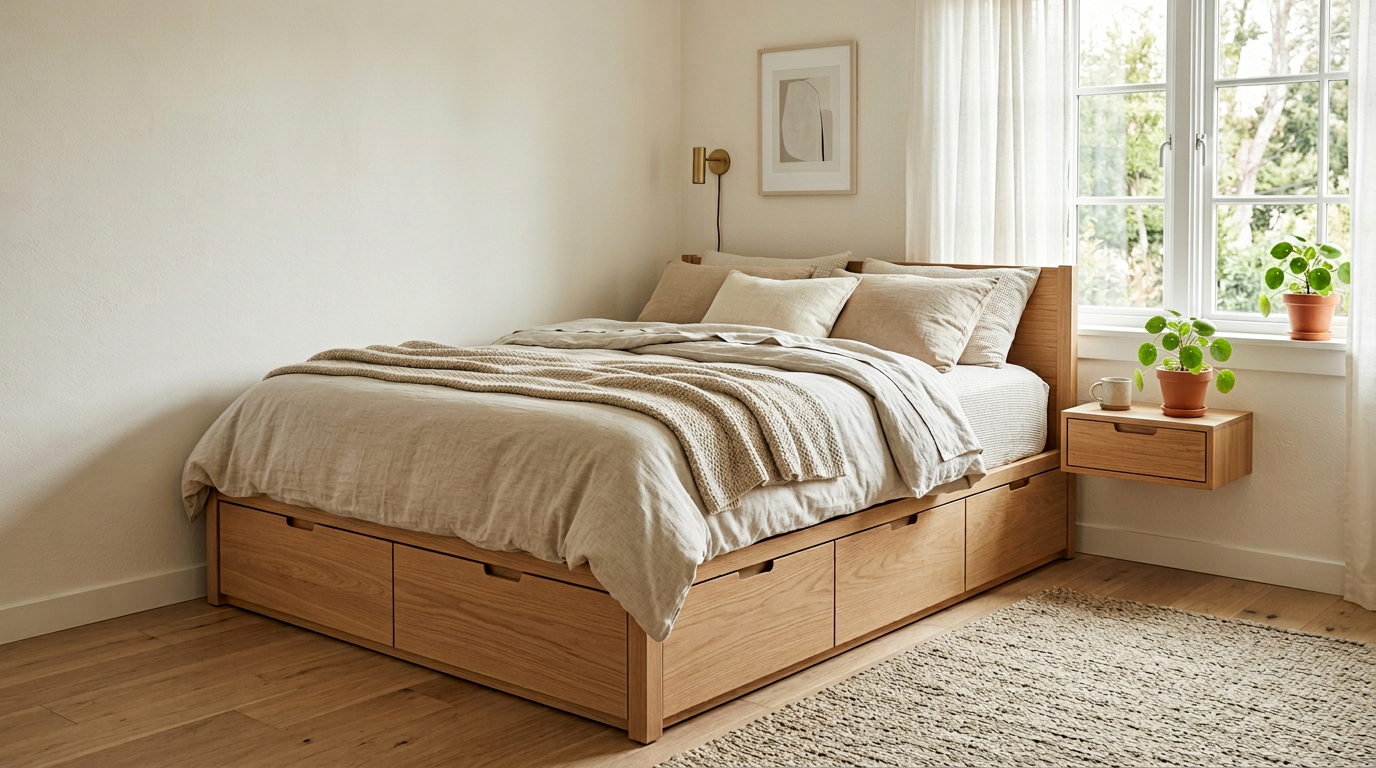
When square footage is tight, the bed itself should earn its keep. A storage platform bed with two or four drawers (or a lift-up mattress base) replaces a separate bulky chest for linens and off-season clothes. Look for full-extension drawer glides so you are not fishing blindly in the back, and measure your path from the hallway—some frames ship in one heavy box and need clearance around corners. Pair the bed with breathable linens and leave a few inches of air gap so moisture does not collect against the wall. If you are also refreshing paint, see how color reads in our small-room color guide for similar undertone tricks.
2. Slim nightstand with open shelf
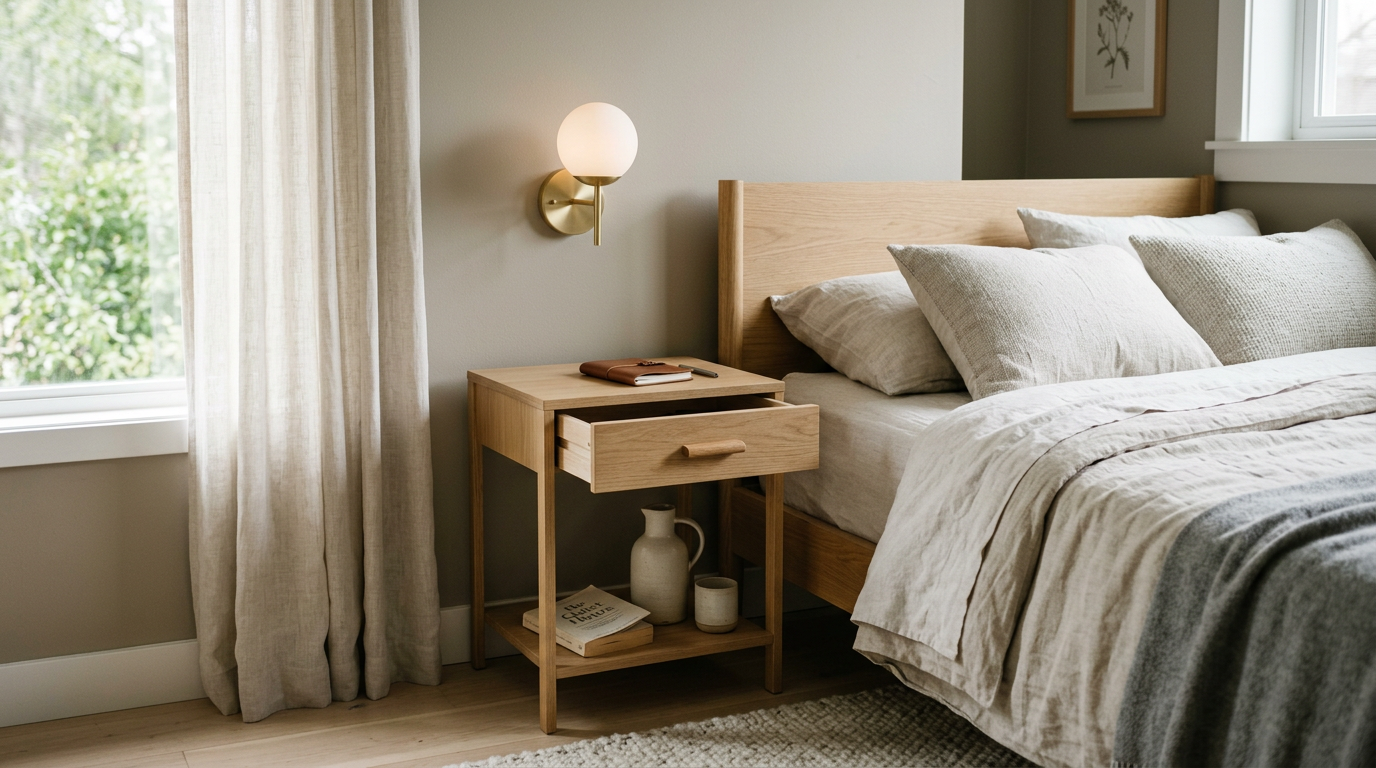
A slim nightstand (sixteen to twenty inches wide) with at least one open shelf keeps glasses, books, and a charger within reach without blocking flow. Prefer one drawer for private clutter and an open tier for a basket or water carafe. Cord management matters: a discreet notch or cable clip prevents wires from tumbling to the floor. If you only have room on one side, mirror the visual weight with a tall plant or slim floor lamp on the opposite side so the bed still feels centered.
3. Wall-mounted folding desk
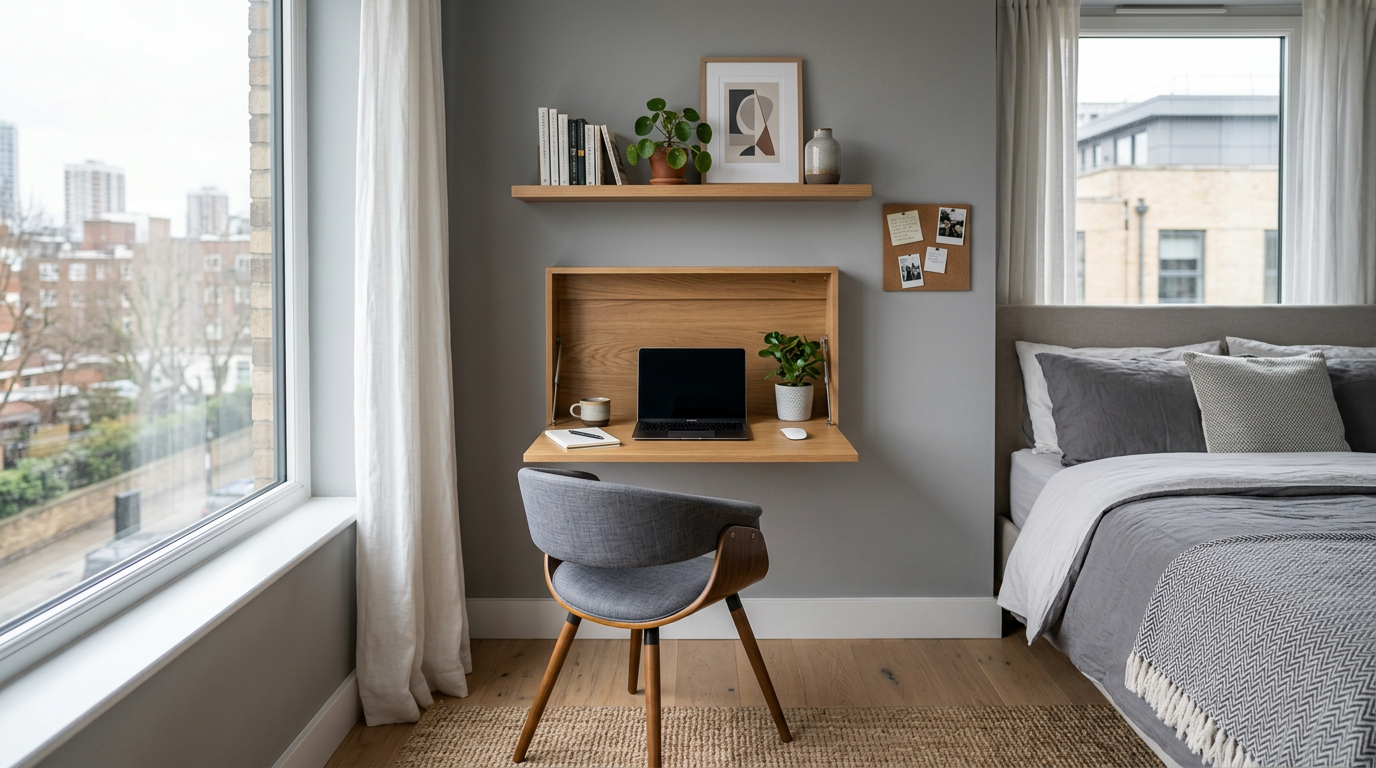
A wall-mounted folding desk gives you a real work surface that disappears after hours—ideal when the bedroom doubles as an office. Mount into studs, confirm weight ratings, and choose a depth of at least eighteen inches for a laptop plus notebook. Add a magnetic sconce or clip light so you are not relying on overhead glare. When the leaf is folded, the wall should still look intentional: consider matching the desk finish to your door trim for a built-in look.
4. Tall vertical dresser (narrow footprint)
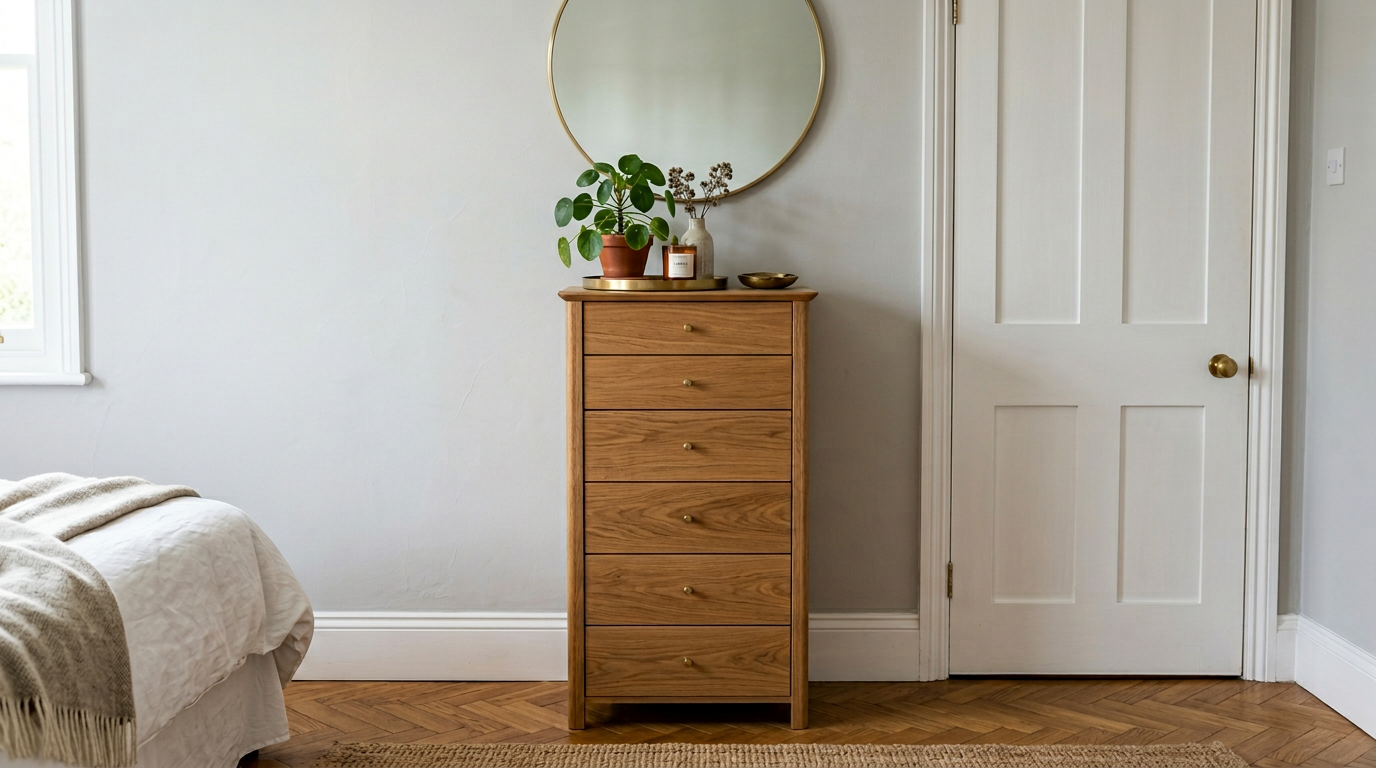
A tall vertical dresser uses height instead of width, which is the secret in narrow bedrooms. Seven or eight shallow drawers often beat four deep ones because you see everything at a glance. Anchor tall pieces to the wall if children or pets share the space. Keep the top minimal—a tray for perfume, one framed photo—so the room does not feel top-heavy. For more layout ideas that balance storage and seating, browse our living room layout principles; many of the same sight-line rules apply.
5. Narrow console for studio bedrooms
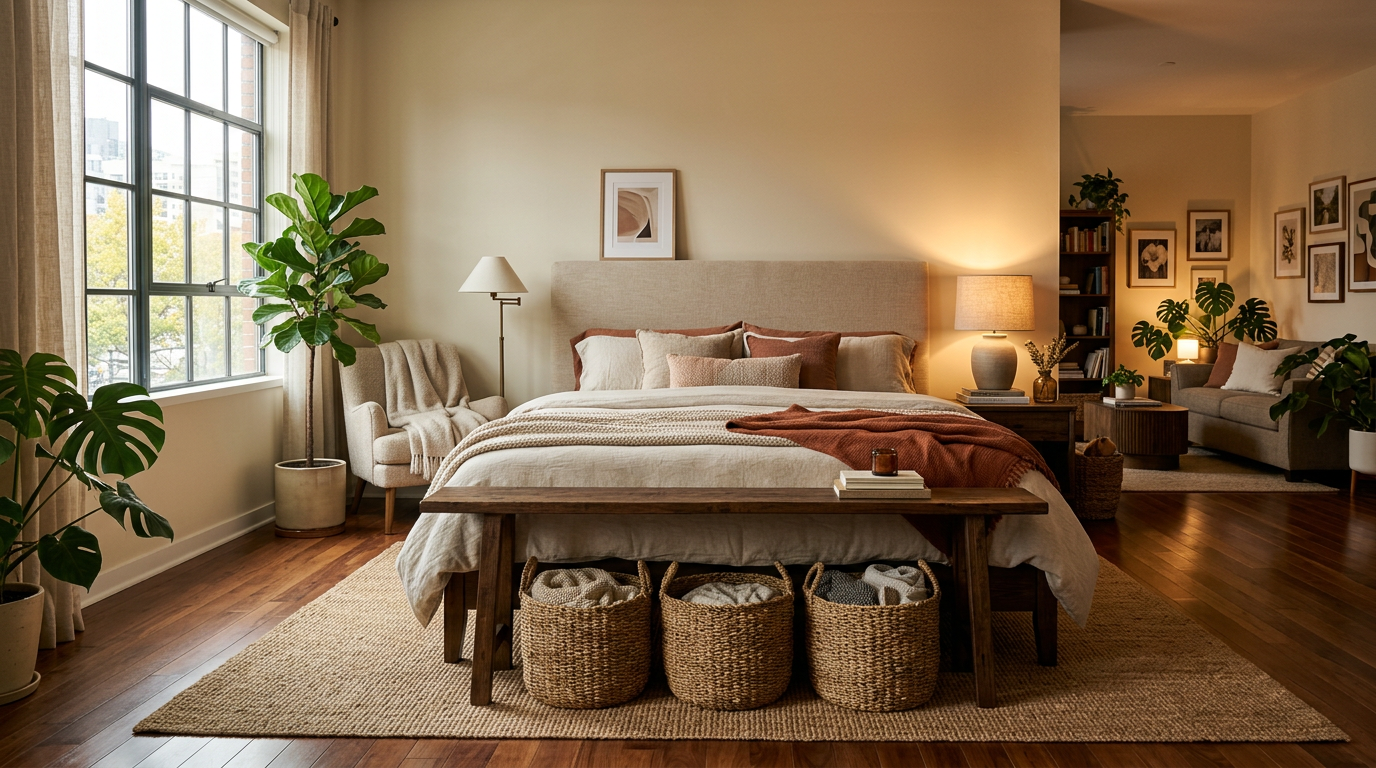
In a studio, a narrow console behind the headboard defines the “sleeping zone” without a full partition. Choose a height slightly below the mattress rail so pillows still read visually clean. Use baskets underneath for shoes or spare bedding. If the console backs a walkway, round the corners to protect shins. A low table lamp with a warm bulb keeps the light human-scaled for reading without lighting the whole apartment.
6. Nesting side tables
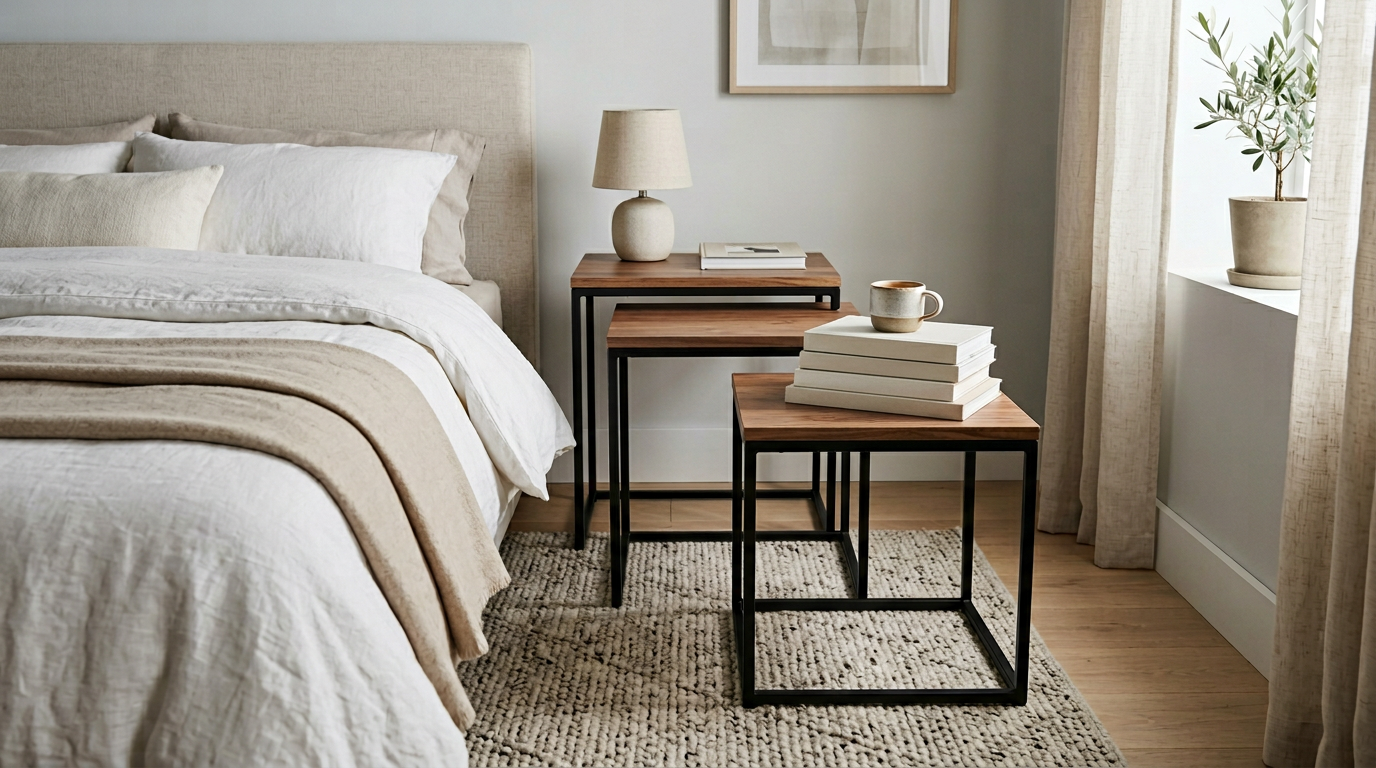
Nesting side tables let you expand surface area when guests visit and tuck everything away on ordinary nights. Pick a set with different heights so they stack without wobble. Materials like metal and wood mix well with soft bedding and add contrast. When nested, the largest table can hold your nightly essentials; when separated, the smaller piece becomes a drink perch or plant stand by the window.
7. Storage ottoman at the foot of the bed
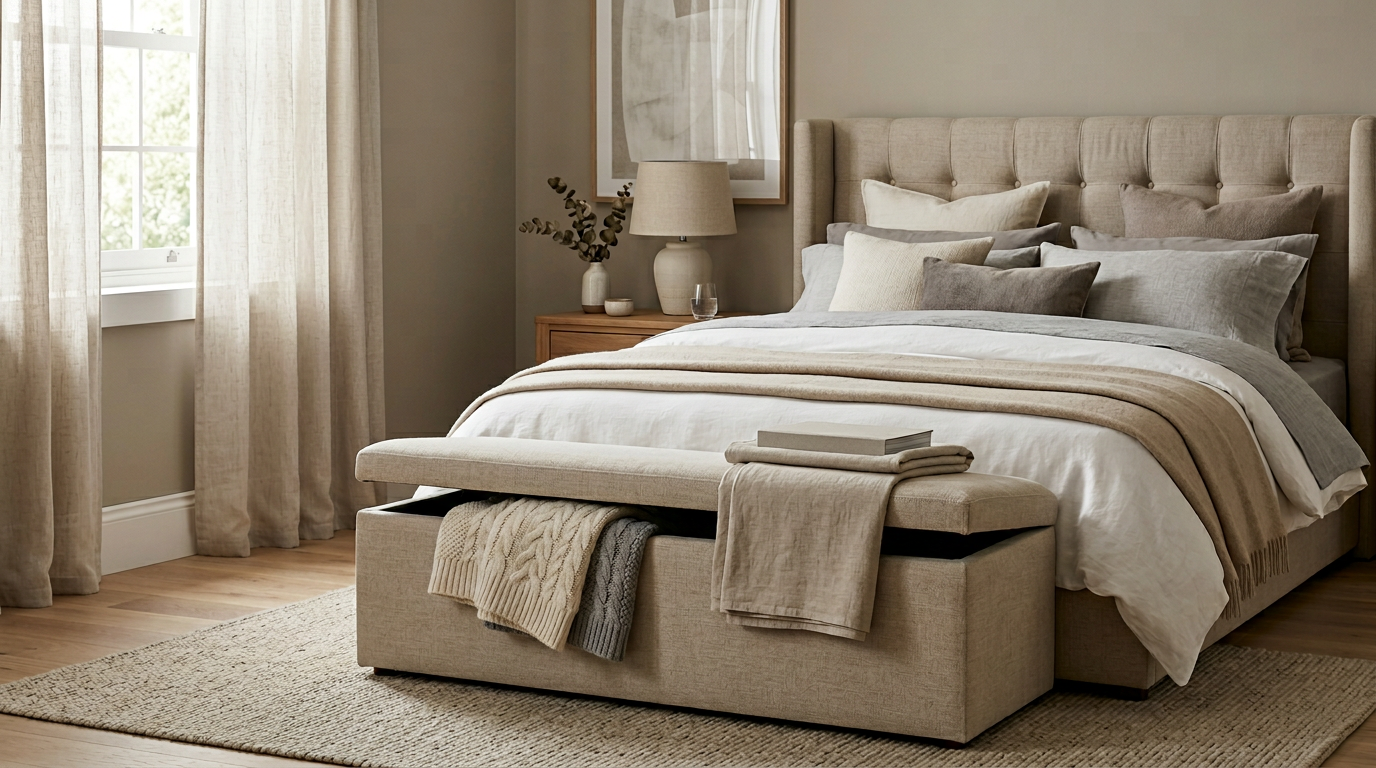
A storage ottoman at the foot of the bed offers seating while you put shoes on and hides spare blankets inside. Choose a height within two inches of your mattress rail for a tailored look. If you have a fabric headboard, echo one color from the textile on the ottoman for cohesion. Avoid oversized tufting if the room is very small—clean planes keep sight lines calm.
8. Floating drawer shelf above the bed
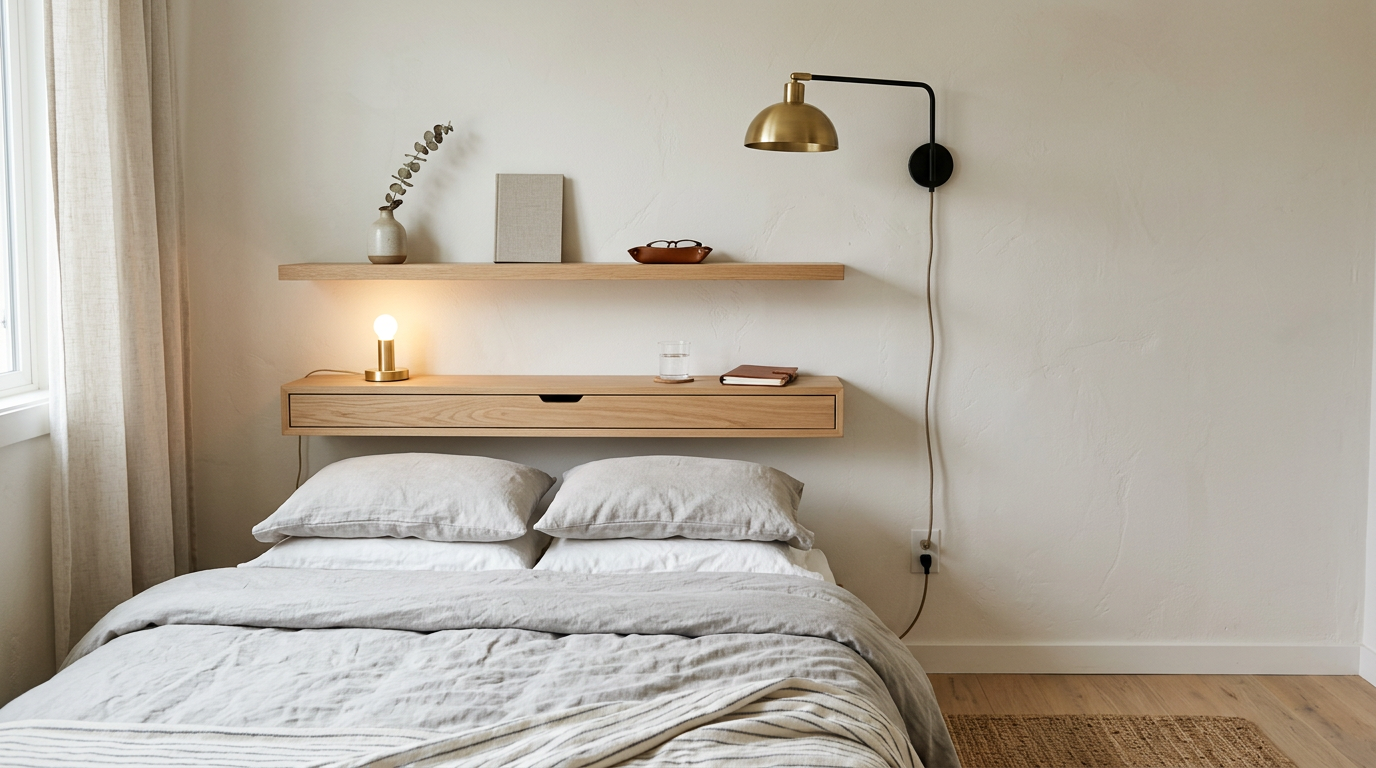
Floating shelves with a slim drawer create a pseudo-nightstand when floor space is zero. Install level, hit studs, and keep total depth around ten to twelve inches so you do not bump heads sitting up. Store lightweight items up high (extra pillowcases) and heavier items lower. This trick pairs beautifully with plug-in wall sconces that free the surface from lamps entirely.
9. Corner etagere for vertical display
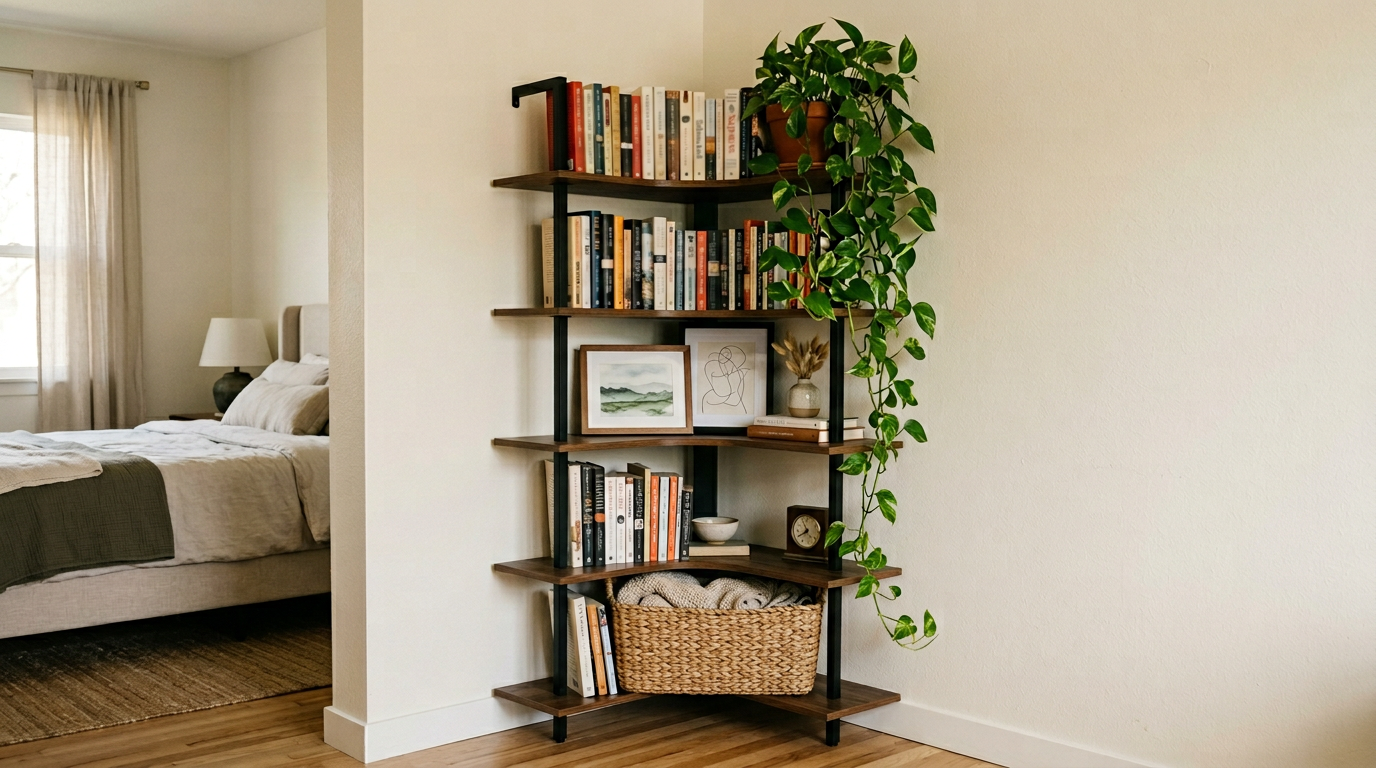
A corner etagere turns dead angles into display and storage. Look for five or more tiers, stagger heights with books and baskets, and keep heavier items on lower shelves for stability. In bedrooms, mix closed bins for chargers and cables with open tiers for greenery—our plant accent wall ideas share similar layering logic on vertical planes.
10. Murphy or cabinet wall bed
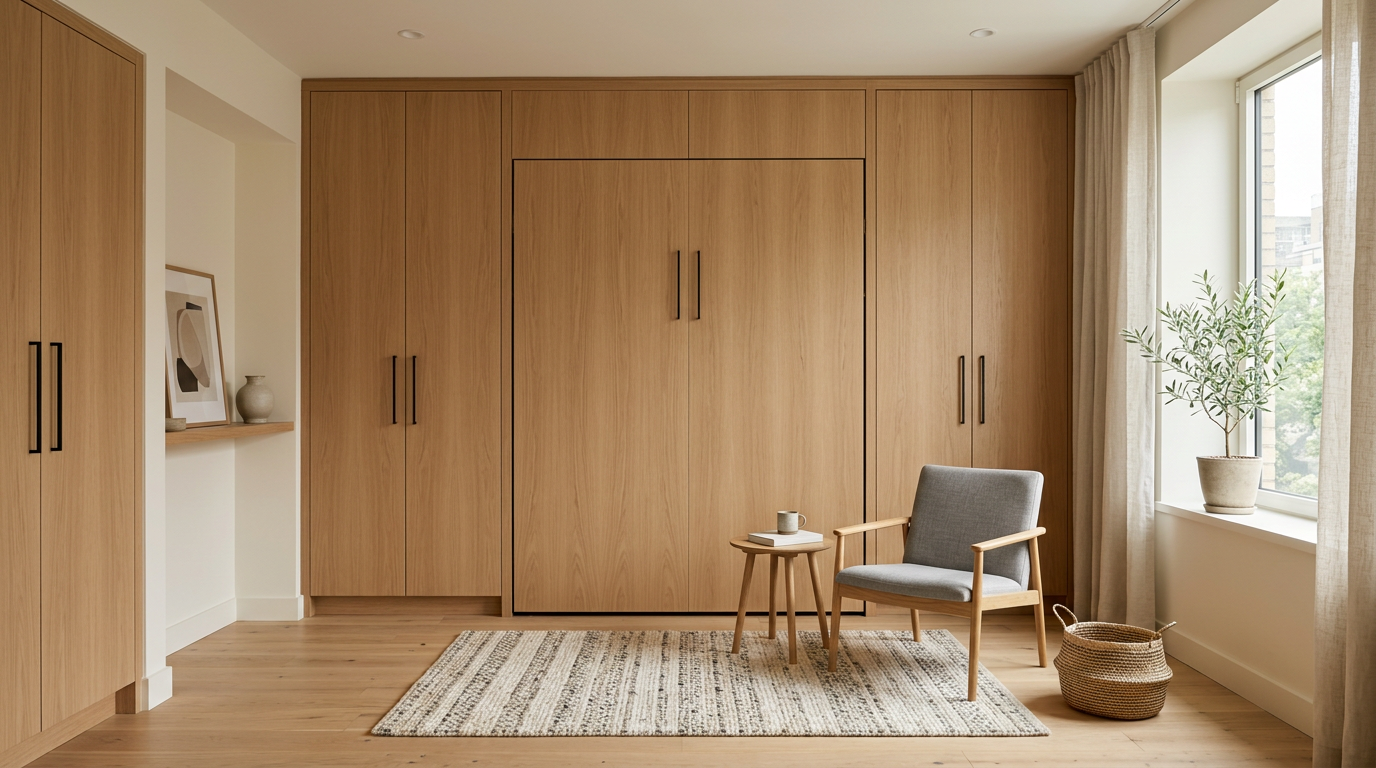
A Murphy or cabinet bed is an investment, but it returns daytime floor area for yoga, play, or a project table. Measure ceiling height and baseboards carefully; some units need extra top clearance. Choose a mattress thickness approved by the manufacturer so the mechanism closes safely. If a full murphy is out of budget, a high-quality daybed with a trundle can be a halfway solution.
11. Ladder desk with a slim profile
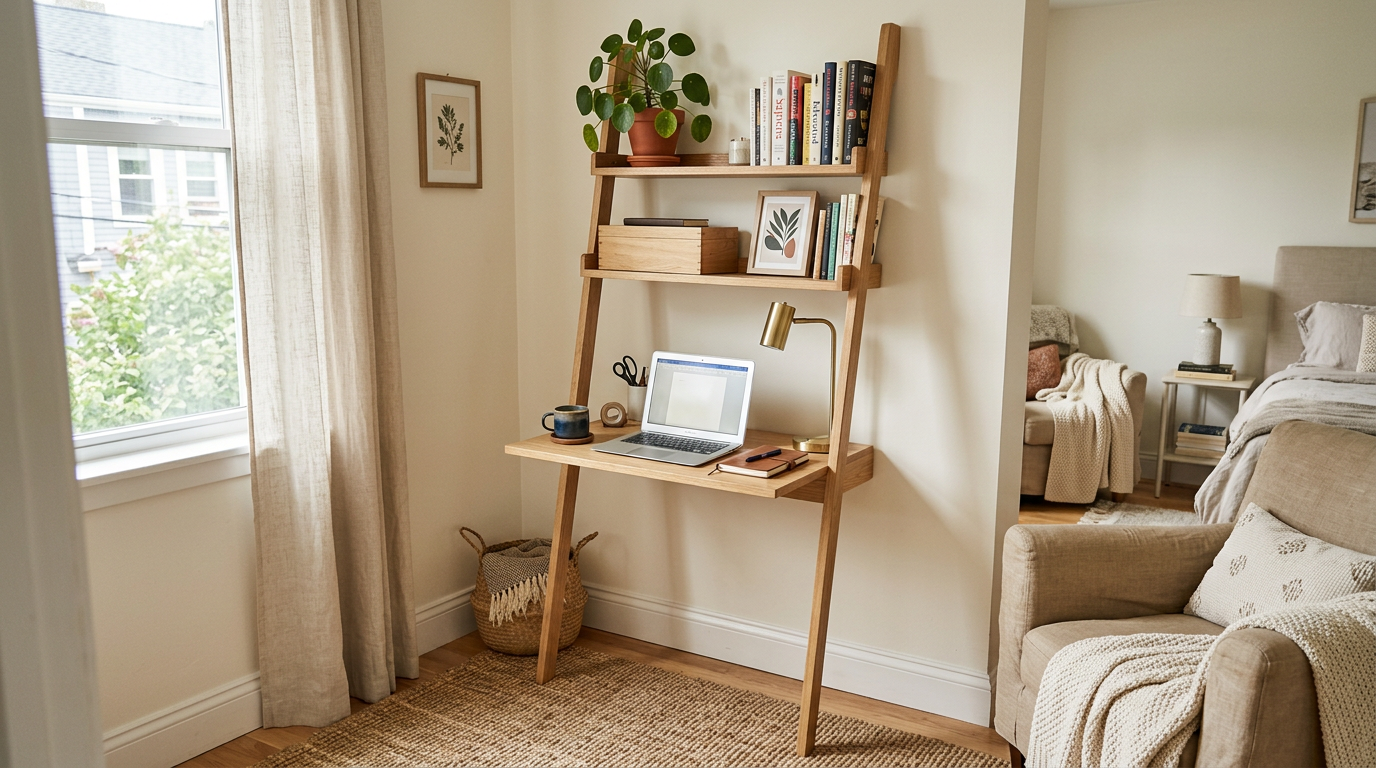
A ladder desk stacks a small desktop above two or three shelves, ideal beside a closet door. Use the shelves for reference books, a printer on the lowest tier, and keep the desktop clear except for daily work tools. Cable clips along the back leg keep cords from swinging into walkways. This piece shines in teen rooms and guest rooms that occasionally become homework zones.
12. Ultra-slim shoe cabinet
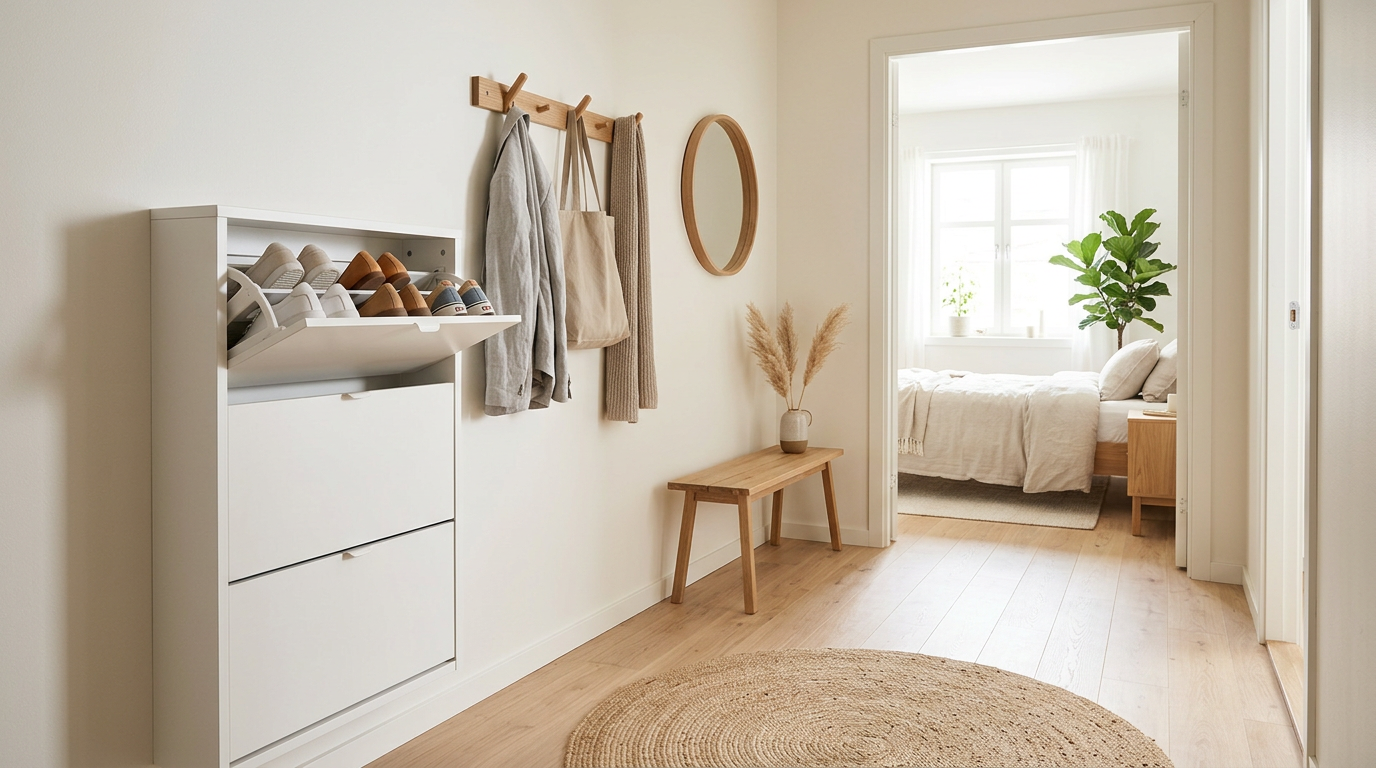
Shoes devour hallway space; a slim shoe cabinet (under ten inches deep) along the bedroom wall keeps pairs ventilated and dust-free. Tilt-out models hide clutter; open benches invite quick grabs. If odors are a concern, cedar inserts or charcoal sachets help. Position the cabinet where the door swing will not block access—sometimes flipping hinge direction is worth the afternoon project.
13. Full-length mirror with hidden jewelry storage
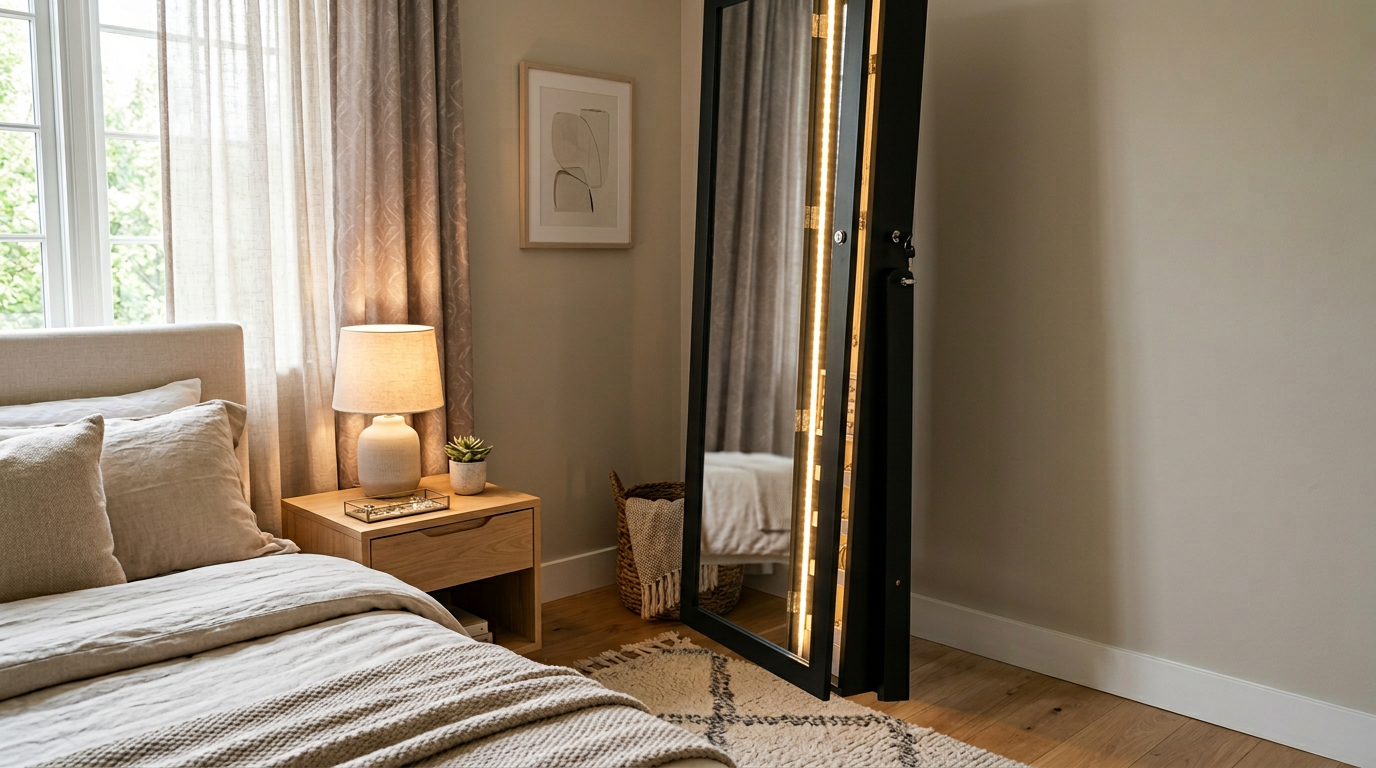
A mirror cabinet combines outfit checks with jewelry and accessory storage—one fewer piece of furniture on the floor. Mount securely, especially on plaster or drywall without studs (use appropriate anchors). Interior LED strips on a dimmer make earrings and links easy to find. For safety with heavy mirrored doors, review CPSC guidance on anchoring furniture when children are in the home.
14. Modular cube storage you can re-stack
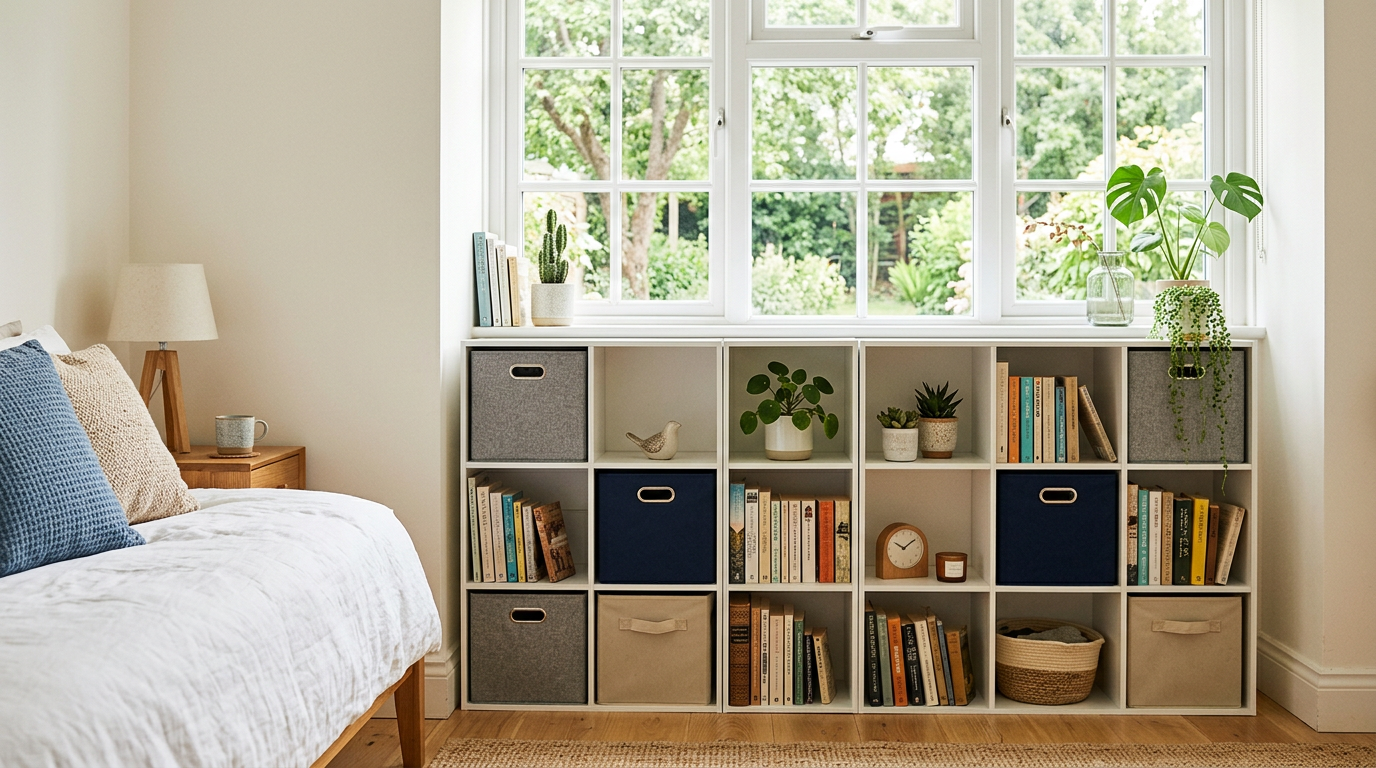
Modular cubes let you start small and add modules when budget allows. Use them under windows (never blocking egress), as a low room divider, or stacked in a closet opening without a door. Fabric bins soften the grid; open cubes display books and art. Label the inward-facing sides if you rotate seasonal storage—future you will thank present you.
15. Wardrobe with sliding doors
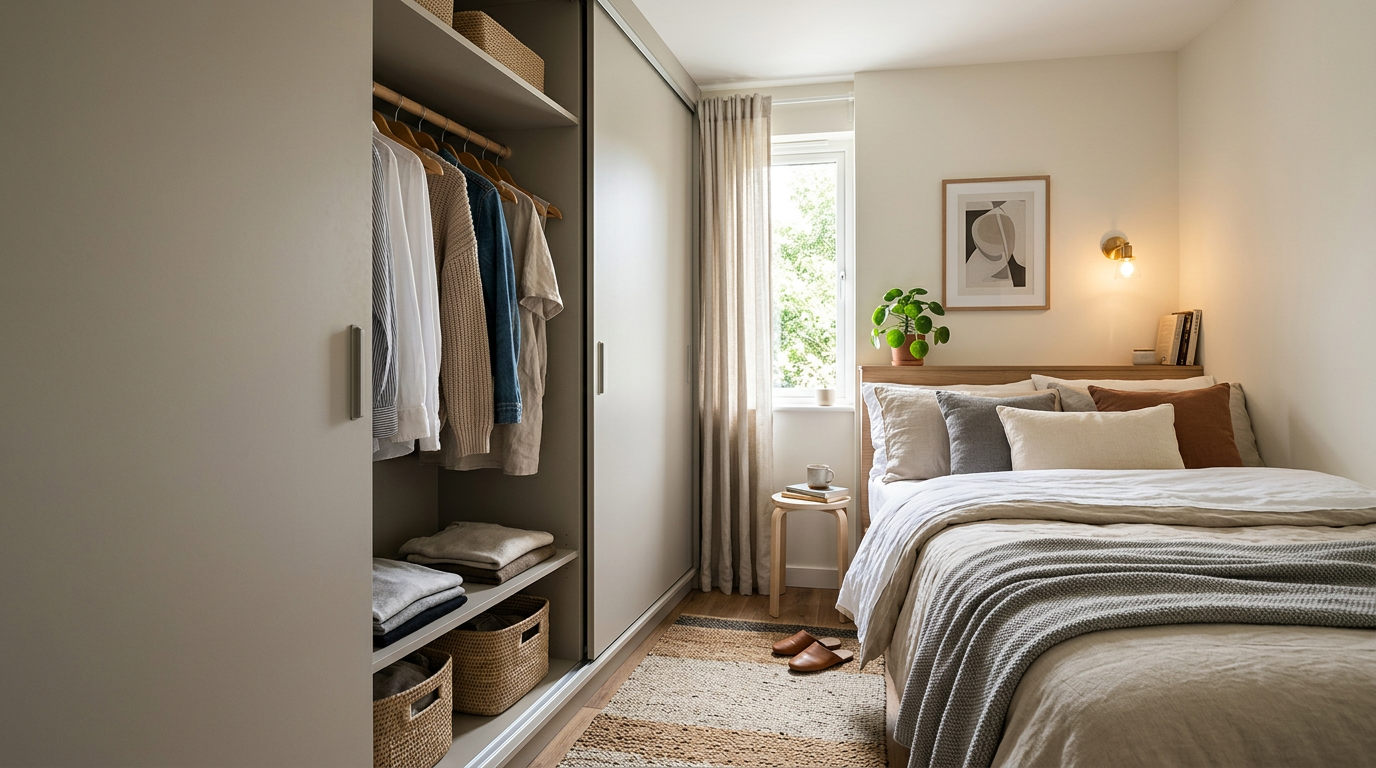
Sliding doors on a compact wardrobe save the swing arc of hinged doors—critical when the bed is close. Look for soft-close hardware and adjustable shelves inside. If the unit is tall, anchor it. Mirrored panels double function but keep bedding patterns simple so reflections do not feel chaotic. Matte finishes hide fingerprints in tight quarters better than high gloss.
16. C-shaped side table that slides under the frame
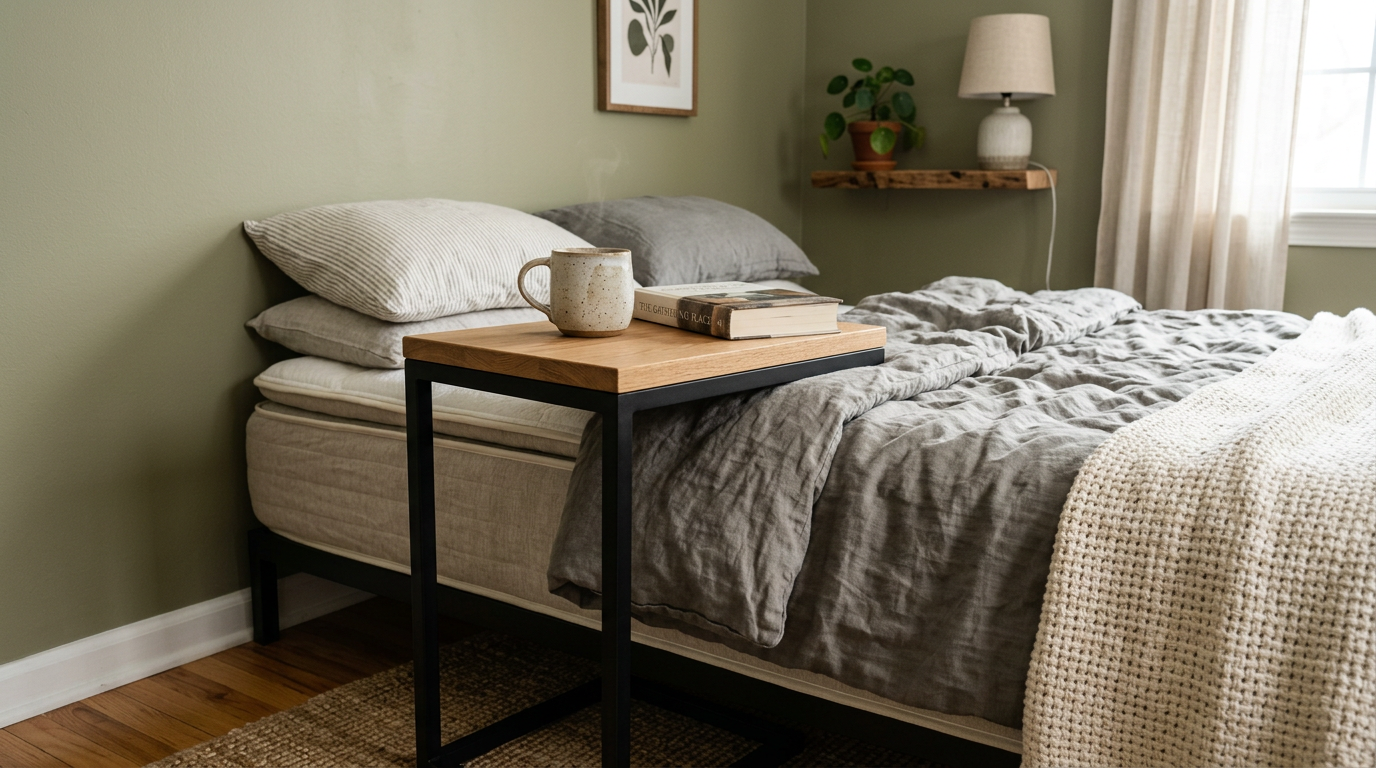
A C-shaped side table slides over the mattress edge or under the sofa-cum-bed in a studio, holding coffee, remotes, or a laptop. Choose a height that clears your mattress thickness plus a few fingers. Weighted bases resist tipping. When not in use, it can park against the wall as a minimal pedestal for a speaker or plant.
17. Wall-mounted drop-leaf table
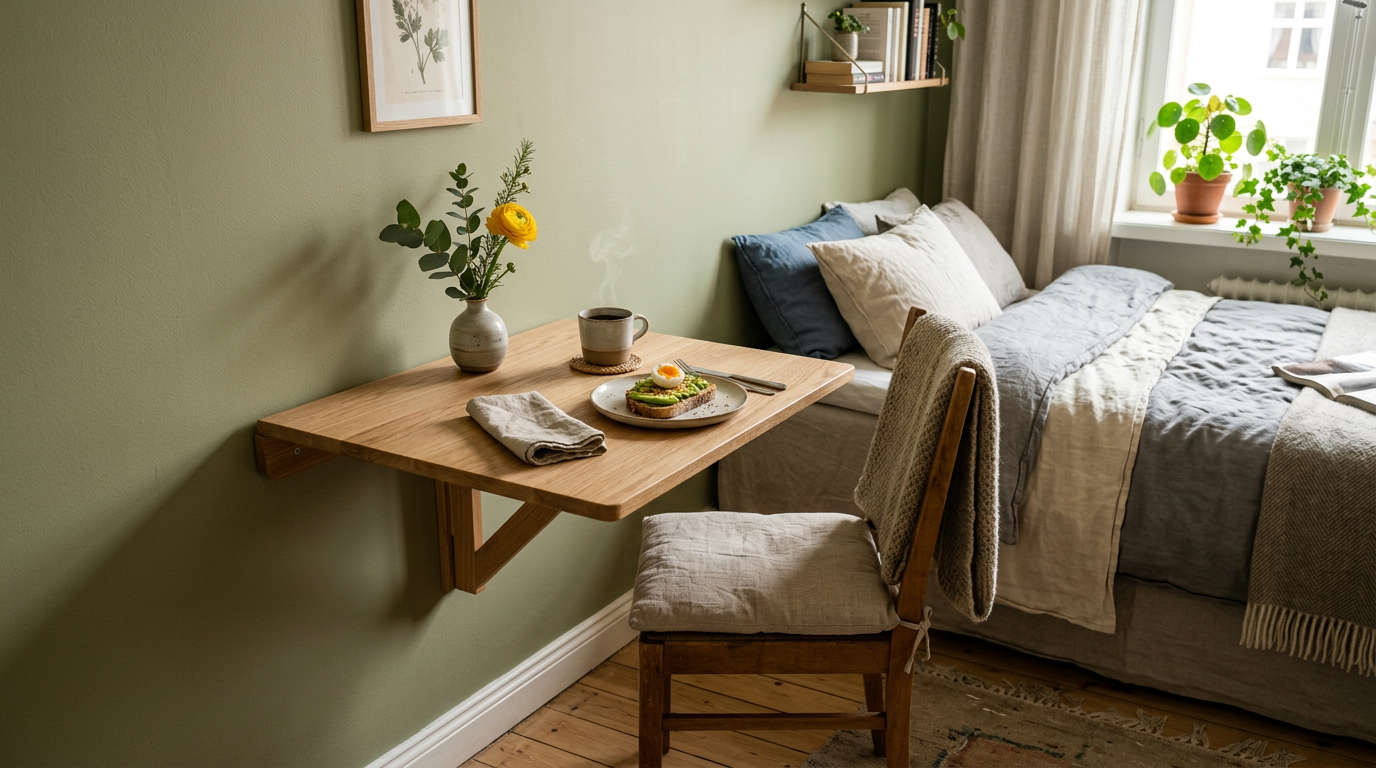
A drop-leaf wall table adds breakfast-for-one or a folding vanity without a permanent footprint. When mounted, the hinge side must be rock solid; test with gradual weight before leaning elbows. Finish the underside the same as the top so it looks polished when folded. Pair with a slim folding chair hung on a wall hook to keep the floor visually open.
Quick answers
What should I buy first in a tiny bedroom?
Start with the bed + one vertical storage piece (dresser or wardrobe). Everything else supports those anchors. Avoid buying decor before you know where laundry, shoes, and clean bedding actually live.
How do I keep a small bedroom from feeling cluttered?
Repeat one metal finish and one wood tone, cap open storage with baskets, and leave at least thirty percent of each shelf visually empty. Light, consistent bedding helps more than another throw pillow.
Can I fit a desk in a 10×10 bedroom?
Yes—use a wall-mounted folding desk or a ladder desk against the least-trafficked wall. Keep the chair slim or foldable, and store paperwork vertically in wall files.
Wrap-up
Home decor ideas bedroom planning gets easier when you treat furniture as infrastructure: storage beds, tall cases, sliding doors, and wall-hung work surfaces reclaim floor you need for calm. Pick three heroes from this list, install them well (level, anchored, measured), then layer textiles and art. For more whole-home context, explore our home decor ideas hub—and edit ruthlessly so every piece earns its footprint.