
You want a Home Decor Ideas Living Room that feels like home and actually works for daily life. Here are practical, stylish ideas to shape color, furniture, lighting, storage, and decor so the room feels balanced and just… works better.
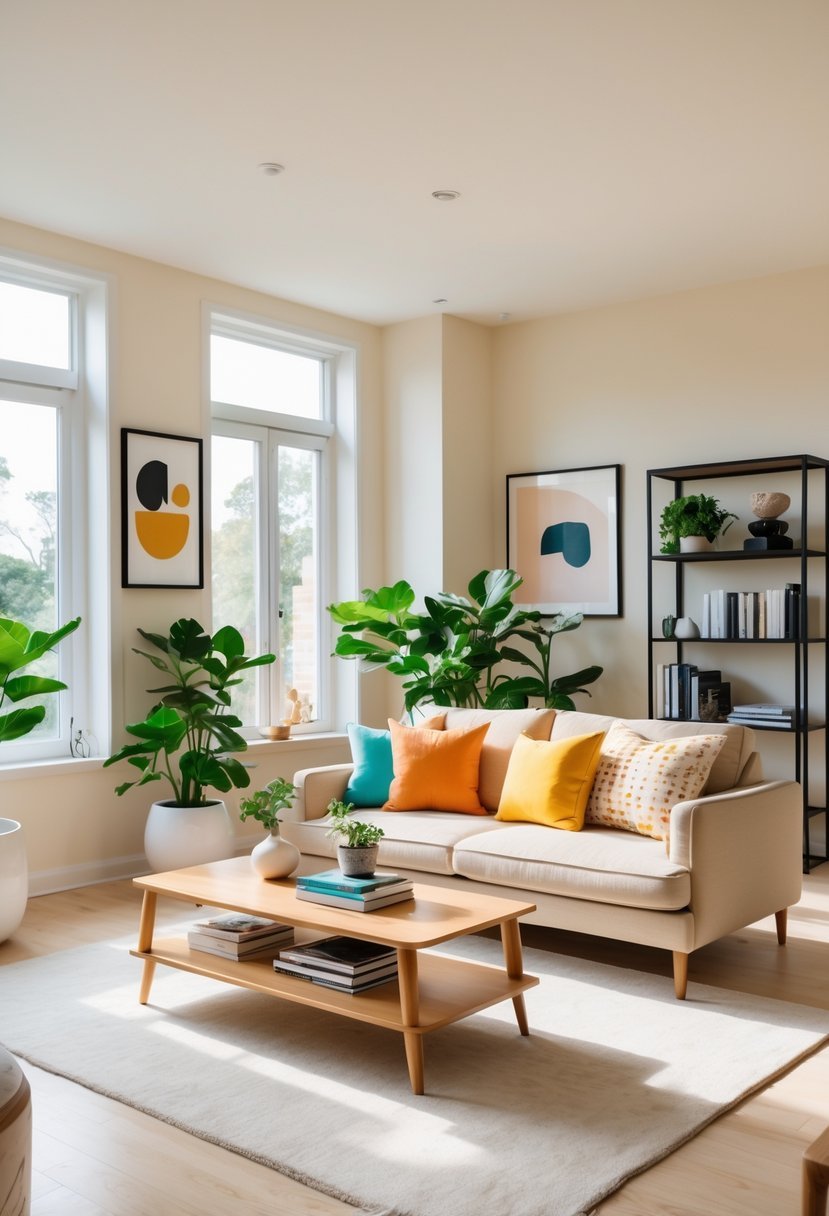
Get clear, doable steps for a comfortable, good-looking living room that fits your taste and needs. We’ll talk palettes, smart furniture, lighting layers, shelving, rugs, textiles, art, plants, mirrors, built-ins, and those little personal touches.
For more ideas across the site, see Home Decor Ideas Bathroom: Transform Your Space into a Stylish Retreat, Laundry Room Ideas to Transform Any Space Into a Stylish, Functional Haven, and Home Decor Ideas.
For trusted context on indoor environments and efficient home lighting, see the EPA indoor air quality overview and Energy.gov lighting efficiency tips.
1. Home Decor Ideas Living Room — Use a neutral color palette with accents in bold hues for balance
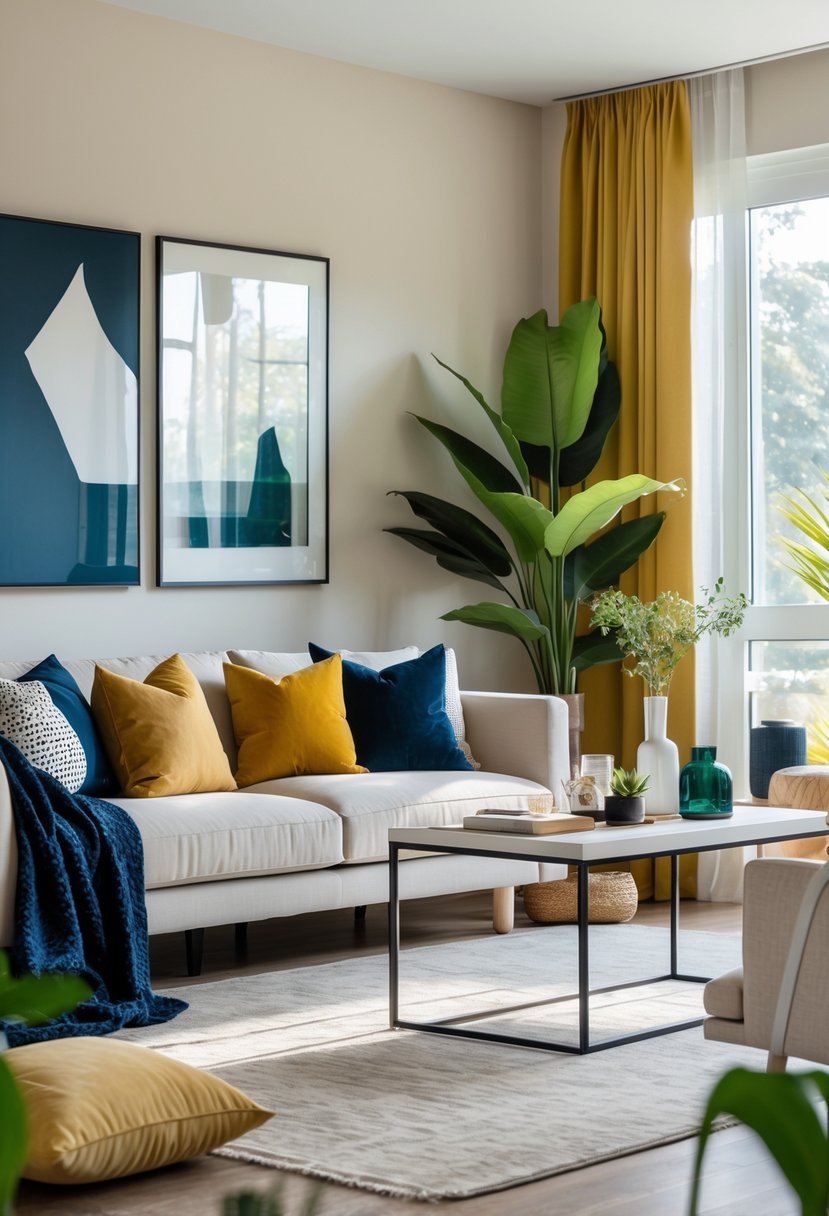
Start with a neutral base—soft whites, warm beiges, muted grays. That calm backdrop lets your furniture and light take center stage.
Add bold accents for a jolt of energy. Maybe it’s a deep teal sofa, mustard pillows, or a rug that pops.
Don’t go overboard with color—just pick a few spots for those accents. That keeps things interesting but not chaotic.
Mix in different textures like wool, wood, or matte finishes. Even with quiet colors, texture makes a room feel layered and alive.
Try repeating a bold color in a couple of places—cushions, art, a lamp. It ties everything together and feels intentional.
2. Home Decor Ideas Living Room — Incorporate multifunctional furniture like storage ottomans
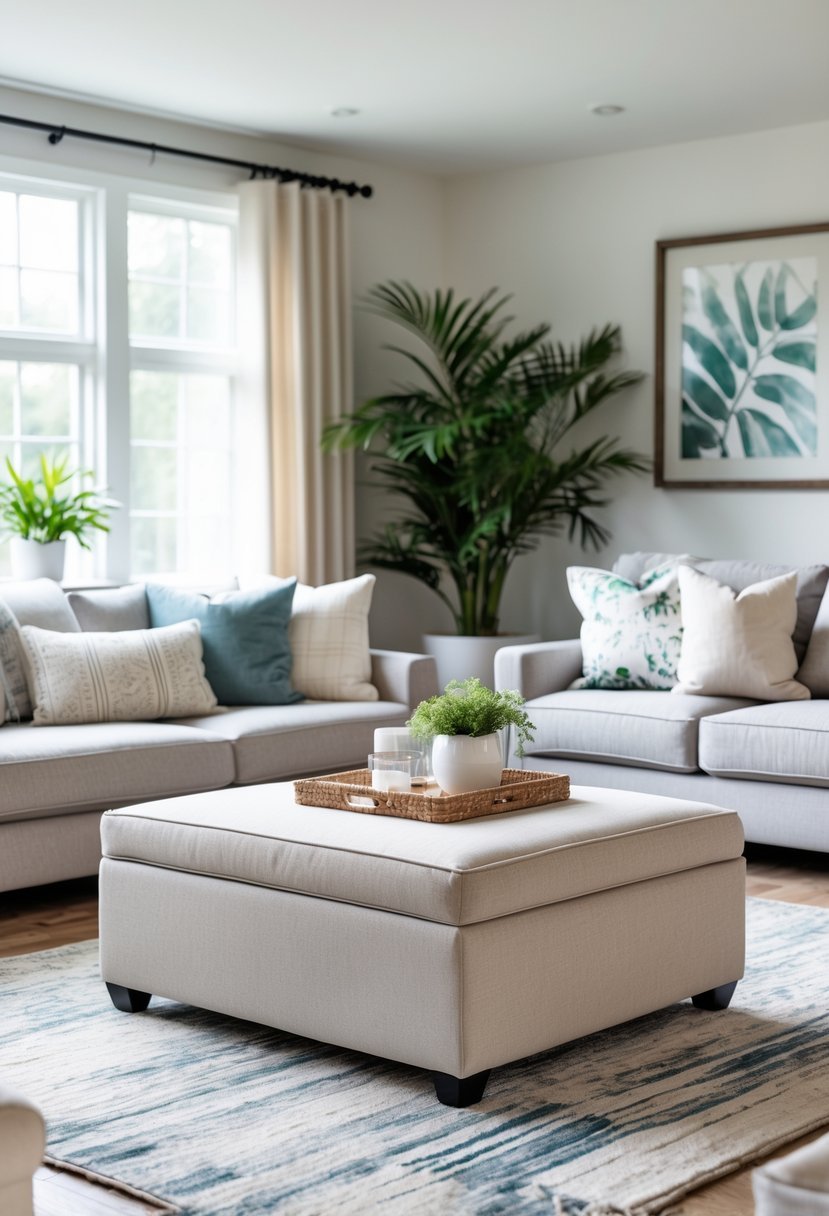
Storage ottomans are a lifesaver. They stash blankets, toys, or magazines and double as a seat or footrest.
If you want to use one as a coffee table, pick an ottoman with a sturdy top. A tray gives you a flat spot for drinks and saves the fabric.
Think about the room’s flow when choosing size and shape. Rounds are great in tight spots, while a big rectangle can stand in for a coffee table.
Go for materials that last. Leather or tough fabrics hold up, and removable covers make cleaning less of a chore.
3. Home Decor Ideas Living Room — Add layered lighting: combine floor lamps, table lamps, and ceiling fixtures
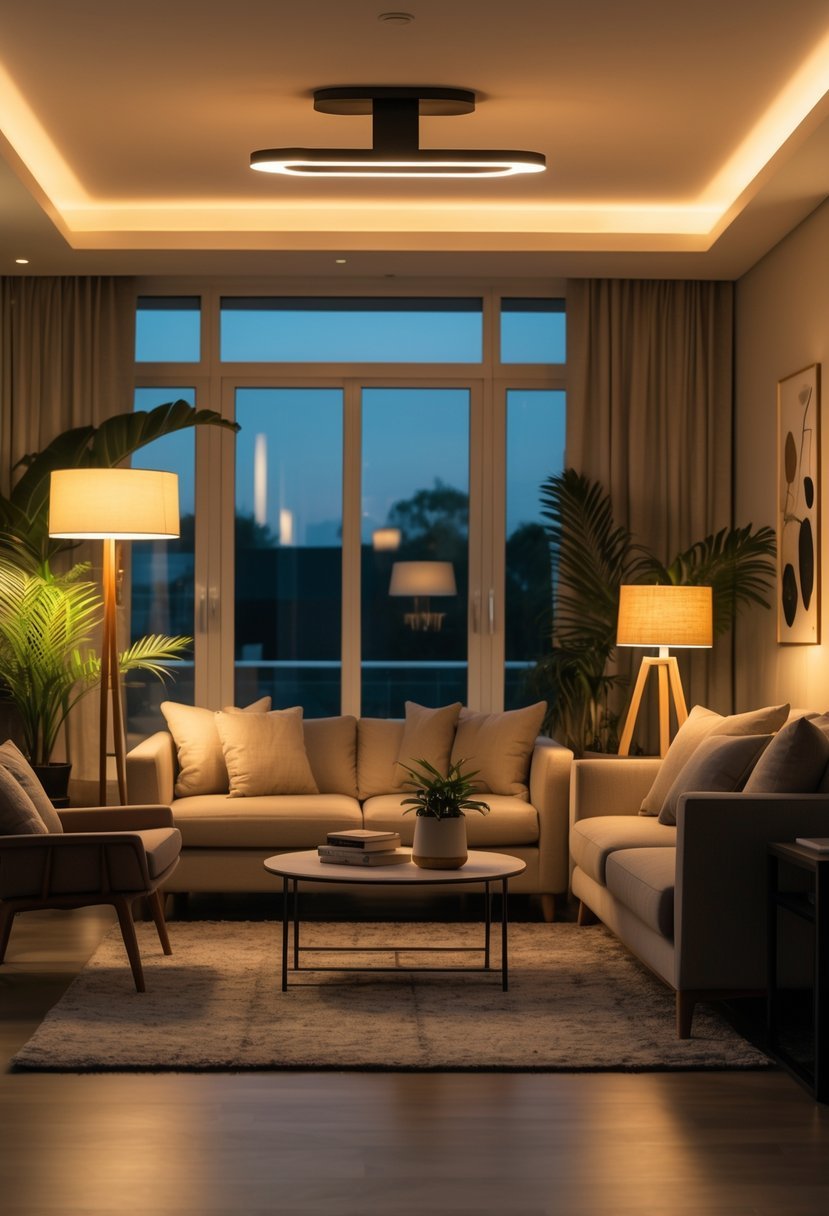
Layer your lights—ambient, task, accent. You need ceiling lights for general glow, but floor and table lamps create cozy spots and set the mood.
Put a floor lamp near your favorite chair for reading. Table lamps warm up side tables and fill out empty corners.
Dimmers on the ceiling lights let you tweak the vibe for parties or quiet nights. Accent lamps or picture lights can show off art or textures.
Mix lamp styles and heights, but stick to the same color temperature. Warm white bulbs are cozy, cool ones work for tasks. Don’t mix and match too much or it gets weirdly harsh.
4. Home Decor Ideas Living Room — Install floating shelves for decor and storage
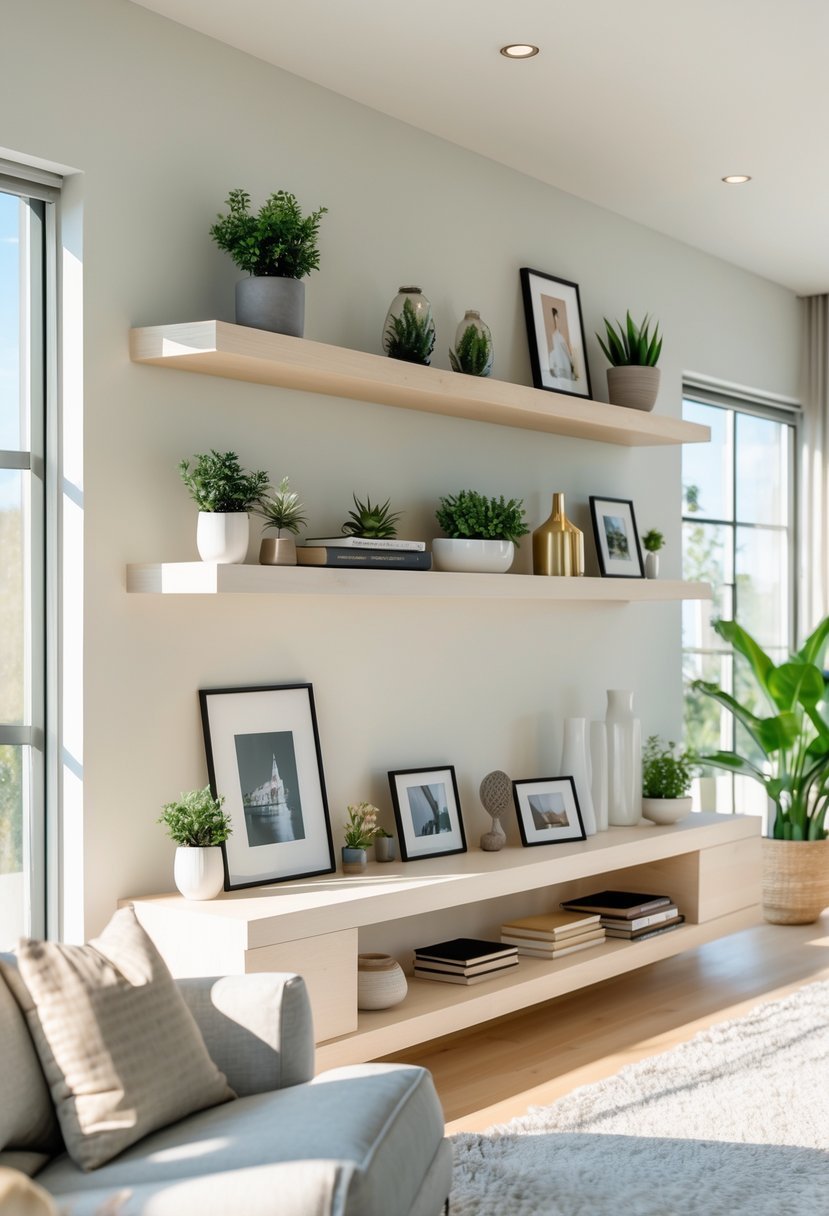
Floating shelves free up floor space and make walls useful. They hold books, plants, and small decor, all while keeping things airy.
Stick to simple materials—wood or metal usually works. Play with shelf heights and widths for some visual interest.
Try shelves above a sofa or console to keep things handy. Baskets on the lower shelves hide mess, while the top shelves show off your favorite pieces.
Make sure you anchor them well, especially for heavier stuff. No one wants a shelf disaster mid-movie night.
5. Home Decor Ideas Living Room — Choose a statement rug to define the space
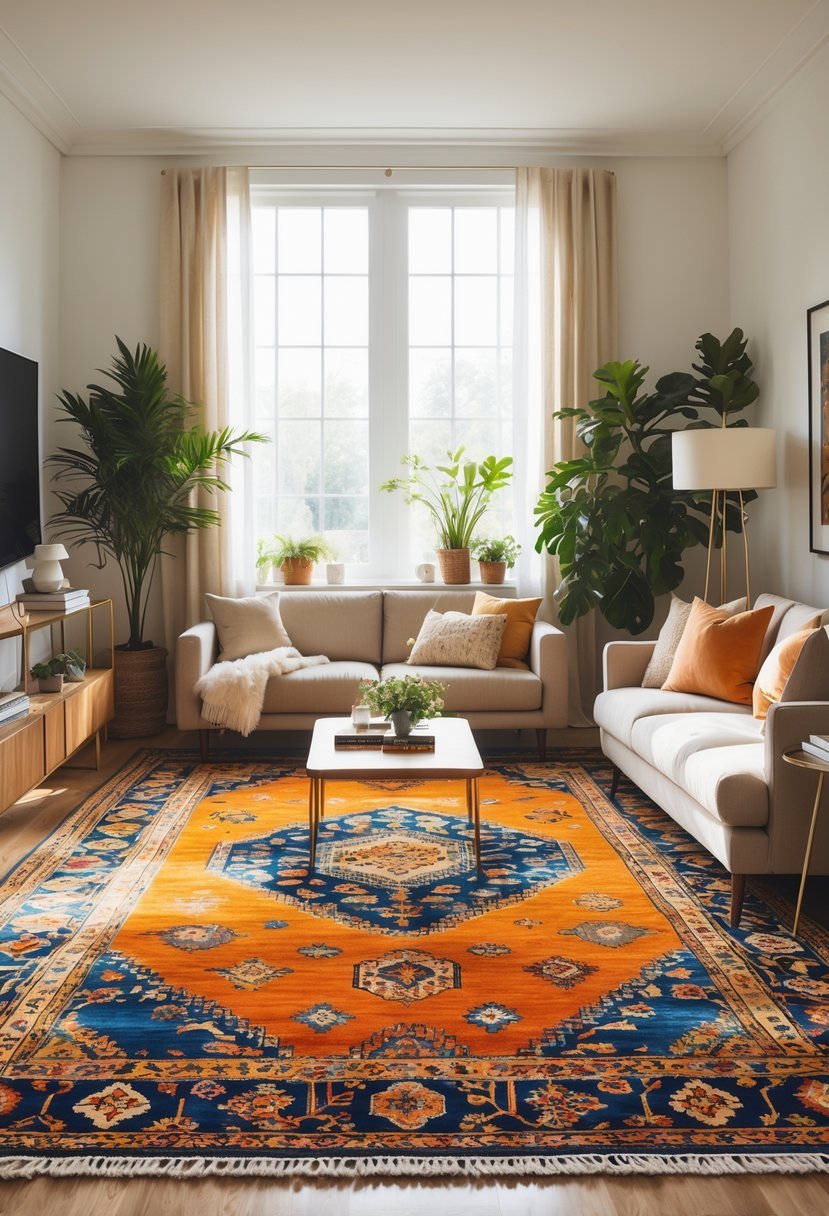
A statement rug grounds the seating area and gives you a real focal point. It’s especially handy in open floor plans where you need to carve out zones.
Pick a rug that fits your furniture. Usually, at least the front sofa legs should sit on it so everything reads as a group.
Match the rug’s vibe to your mood. Bold patterns bring energy, neutrals and natural textures feel warm, and breezy colors keep things chill.
Layering rugs can work too. A patterned rug on top of a neutral base adds depth without going overboard.
If you’ve got pets or kids, look for durable, easy-to-clean fibers. Low-pile weaves handle heavy foot traffic best.
6. Home Decor Ideas Living Room — Incorporate textured fabrics like velvet or linen for depth
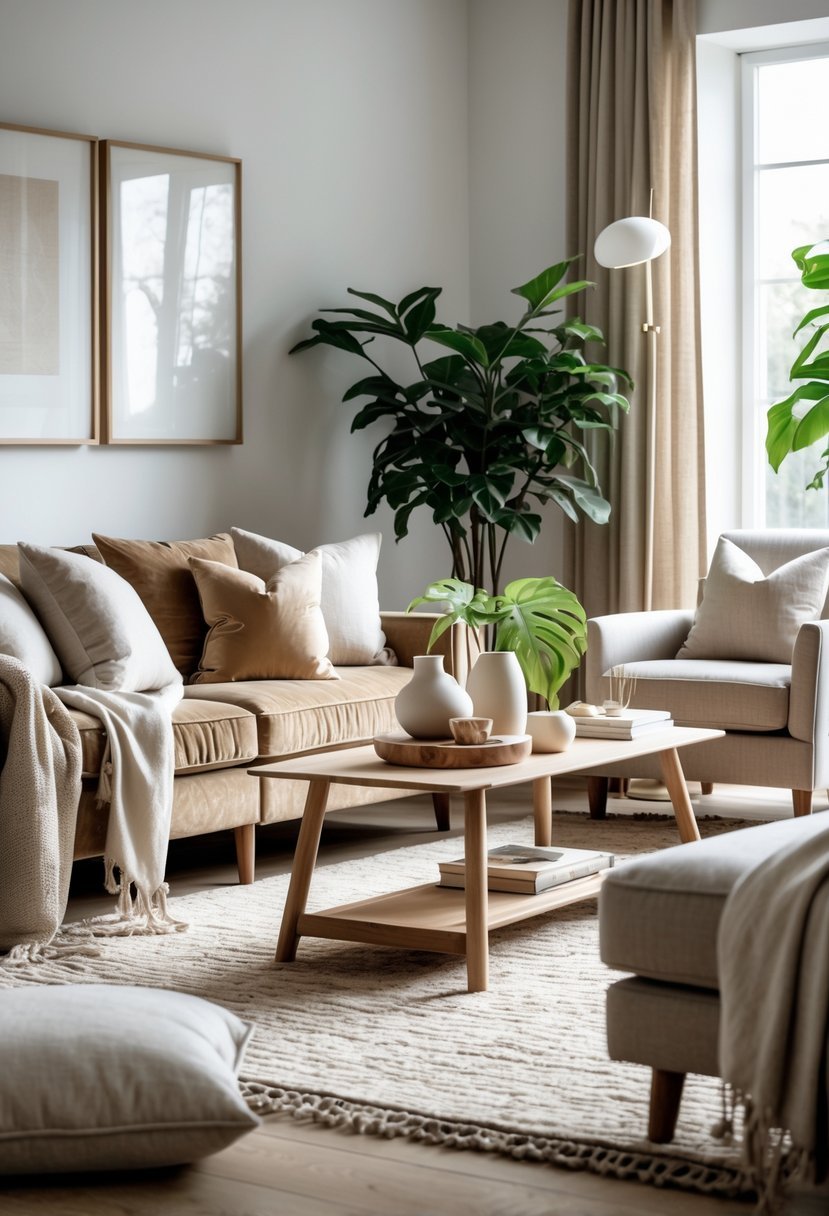
Textured fabrics totally change a room’s feel, and you don’t have to spend a ton. Velvet looks soft and plush, catching the light just right. Linen is casual and a little rustic, which keeps things from getting too formal.
Mix velvet pillows with a linen sofa for a nice balance. Toss a chunky knit throw over a smooth cushion for contrast. Even small bits—like a velvet ottoman or linen curtains—make the room feel more finished.
Colors matter too. Deep jewel tones in velvet are rich, while muted linen softens things. Swap out pieces seasonally if you want a quick refresh.
7. Home Decor Ideas Living Room — Hang oversized wall art to create a focal point
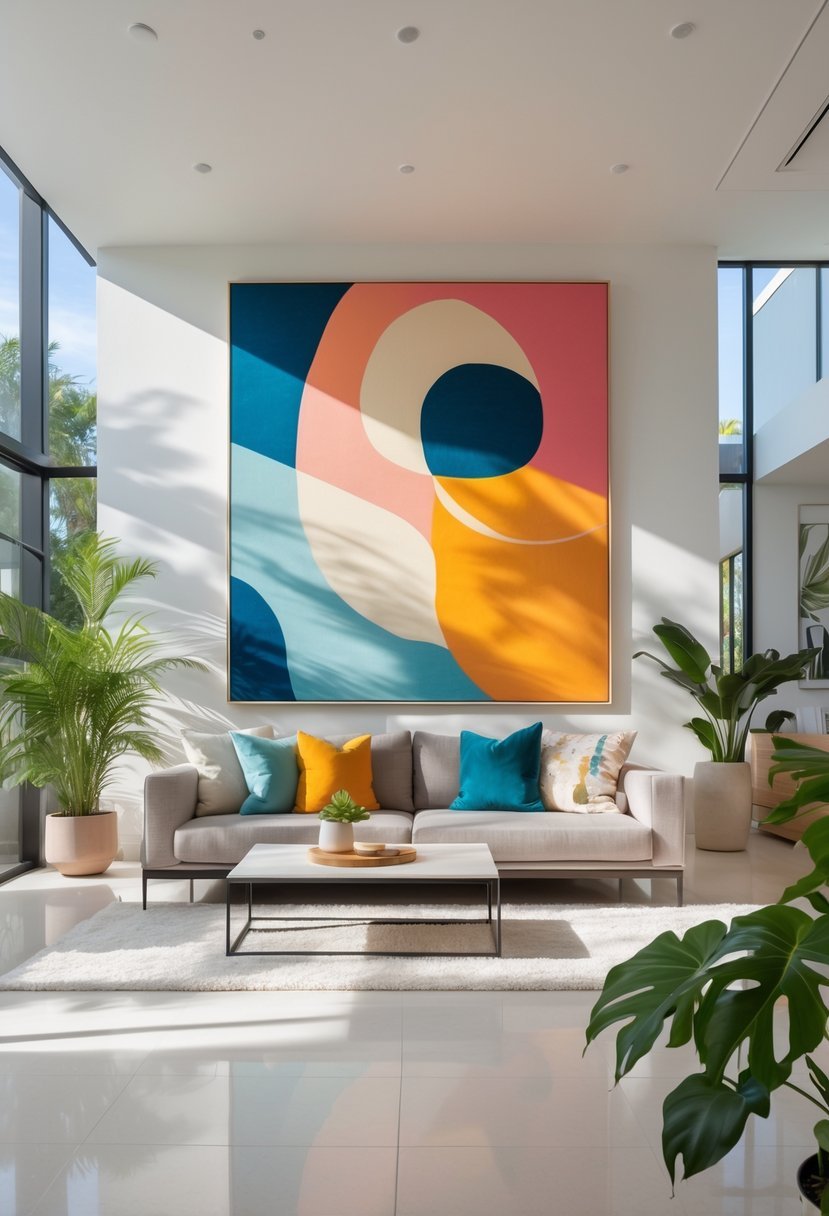
Oversized art makes a blank wall come alive, no fuss required. One big painting, photo, or tapestry can set the mood for the whole space.
Pick something that fits the wall and matches your furniture’s scale. Leave a little breathing room so it doesn’t feel cramped.
Hang art at eye level—usually the center about 57–60 inches from the floor. If it’s above a sofa or console, keep 6–12 inches between the top of the furniture and the bottom of the art.
Group it with smaller pieces for a layered effect, or let it stand alone. Simple frames keep the focus on the art, not the hardware.
8. Home Decor Ideas Living Room — Use built-in bookshelves for both style and function
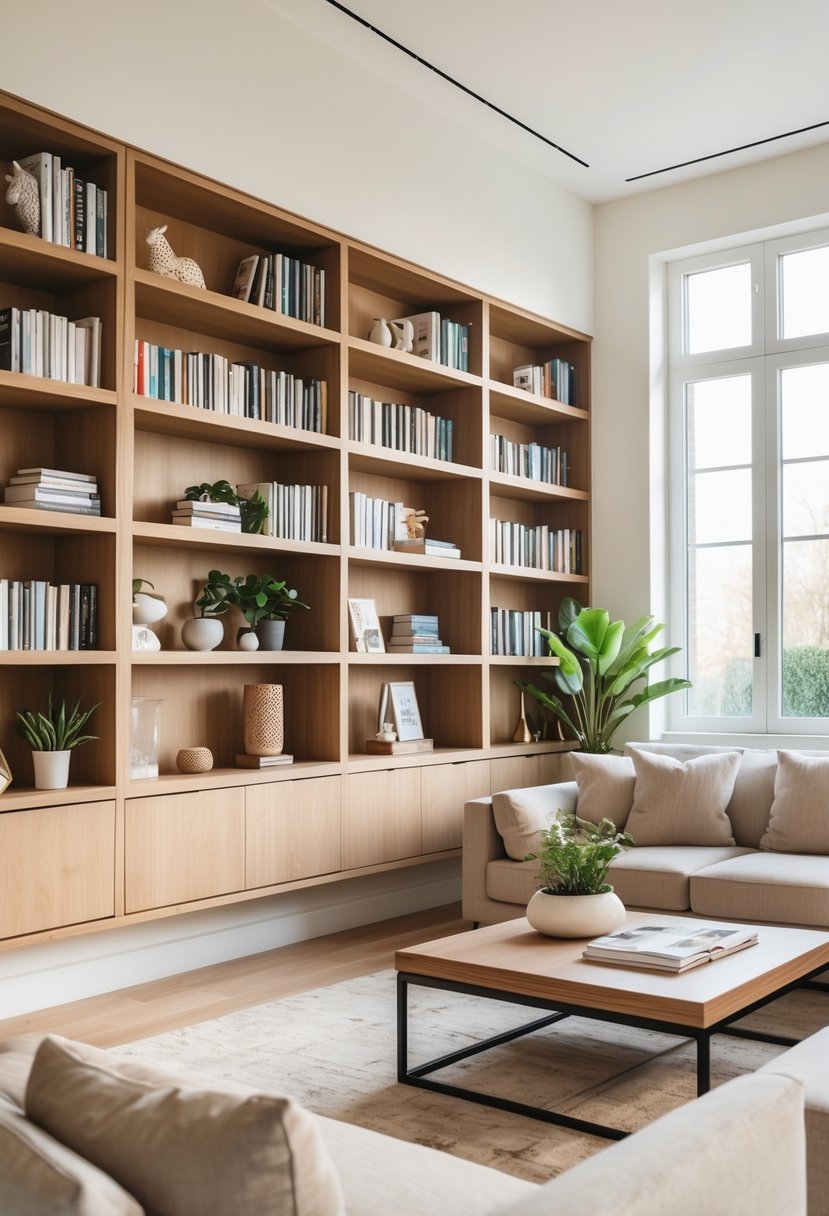
Built-in bookshelves save floor space and make the wall feel custom. They’re both practical and good-looking.
Mix open shelves for display with closed cabinets for hiding clutter. It’s the best of both worlds—show off your favorites, stash the rest.
Paint shelves to match the wall for a subtle look, or go bold for contrast. Vary shelf heights for tall books, plants, or art objects.
Baskets or boxes on lower shelves keep small stuff out of sight. For a cozy reading spot, add a window seat or bench and a lamp. Instant nook!
9. Home Decor Ideas Living Room — Include indoor plants for freshness and color
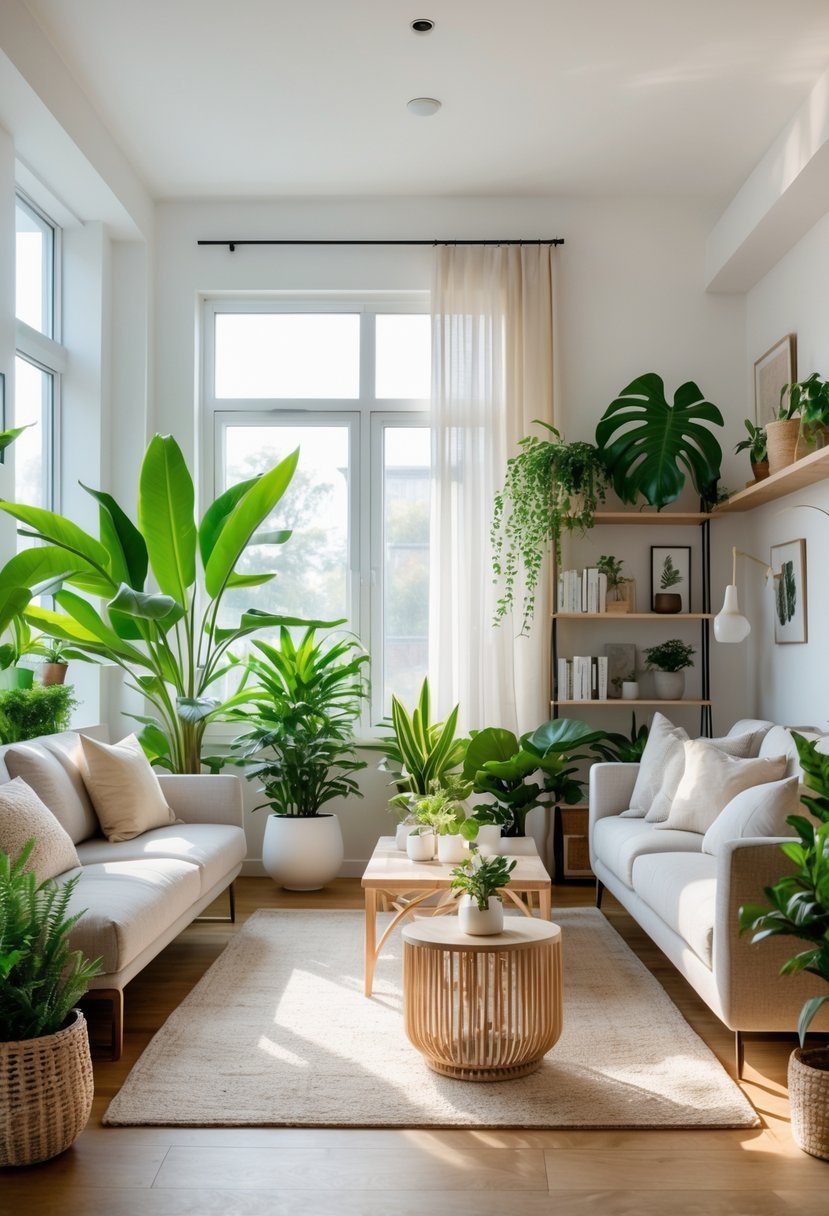
Plants breathe life into a living room, no green thumb required. Mix tall floor plants with little pots on tables for depth.
If you don’t get much sun, stick to low-light, low-care types. Pothos, snake plant, ZZ plant—they’re basically impossible to kill.
Group plants in odd numbers for a natural look. Mix pot shapes, textures, and heights so it doesn’t feel too stiff.
One big plant in a corner can soften edges. Hanging planters or shelf-top greenery work great if floor space is tight.
Rotate plants now and then so they get light on all sides. Check for pests and browning leaves to keep things looking fresh.
10. Home Decor Ideas Living Room — Place mirrors strategically to enhance natural light
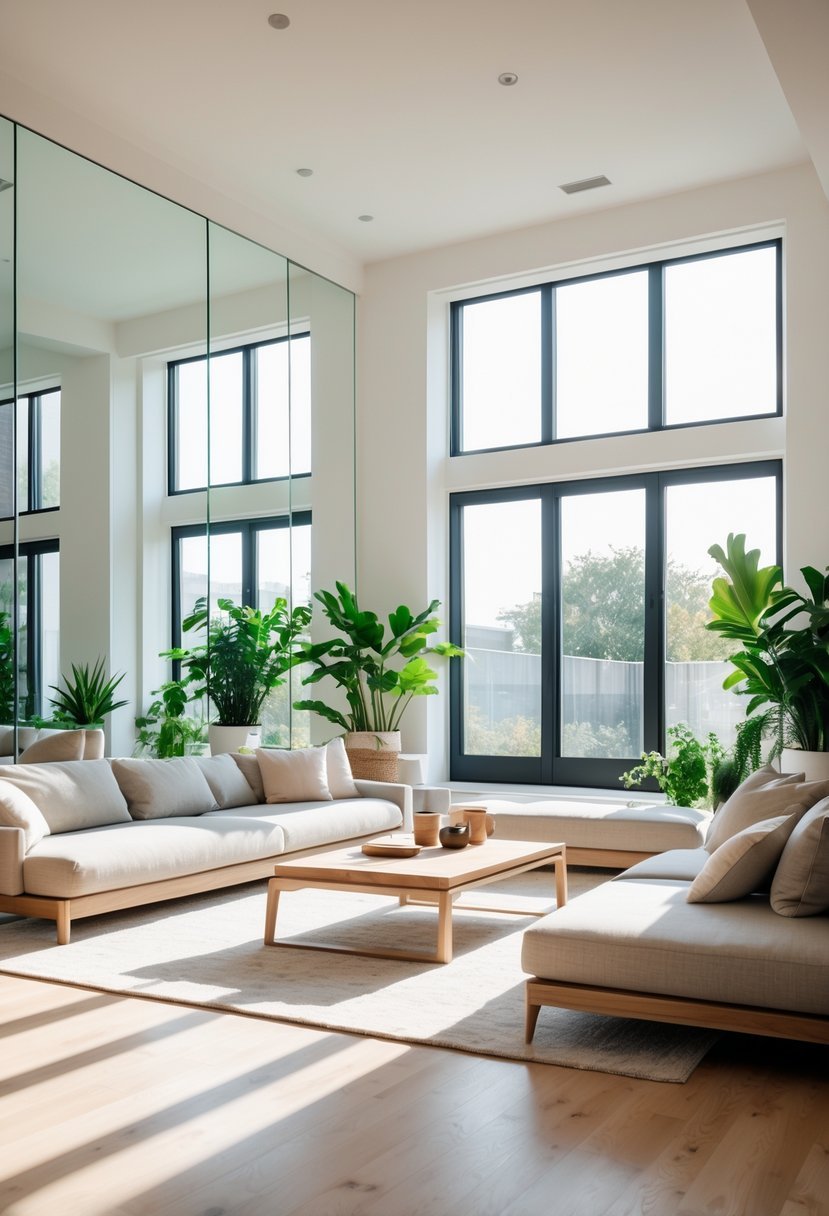
Hang mirrors across from or near windows to bounce light around. It’s the oldest trick for brightening dark corners and making a room look bigger.
Try one big mirror for a bold effect, or cluster a few smaller ones for softer light. Frameless or pale frames keep things airy.
Hang mirrors at eye level, or just above furniture, so they catch and reflect light where you actually spend time. Tilted mirrors can direct light up to the ceiling or onto darker walls.
Mirrored furniture or decor adds a little sparkle without going overboard. Handy in small spaces where every bit of light helps.
Go for good-quality glass to avoid wonky reflections, and wipe them down often. Placement matters—a well-placed mirror is both useful and stylish.
Home Decor Ideas Living Room: Fundamental Principles of Living Room Decor
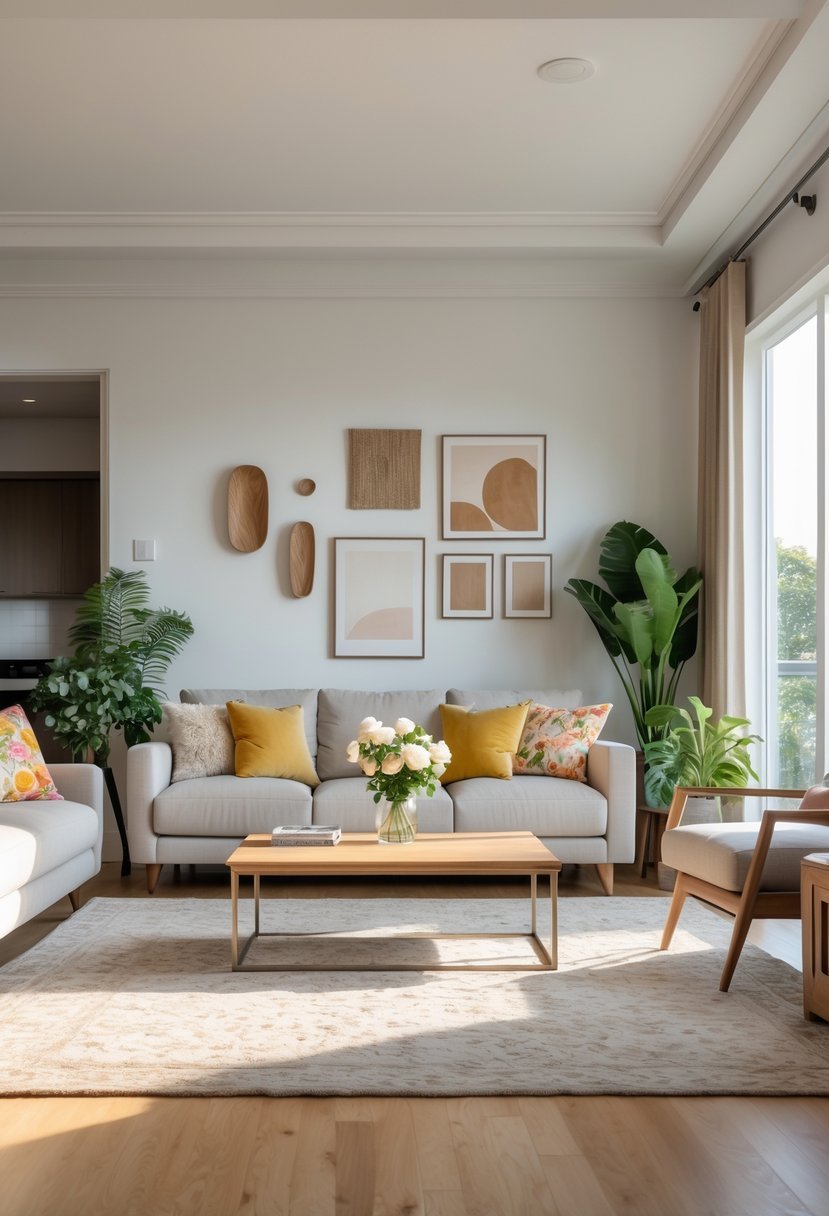
Think about how you’ll actually use the space. Choose colors that connect your furniture and walls, and arrange things so people can move—and talk—easily. Comfort, visual balance, and clear walkways: that’s what really matters.
Balancing Function and Style
You’ve gotta pick furniture that actually fits how you live. If you have a sofa, make sure it seats the usual crowd and leaves at least 18 inches between the coffee table and the couch—nobody likes banged-up shins.
Go for tough fabrics on stuff that gets used all the time. Save the delicate or fancier materials for things like pillows or a side chair you barely sit in.
Lighting’s a big deal, but it’s not just about brightness. Mix overhead lights with a good reading lamp and maybe a dimmer for when you want to wind down in the evening.
Storage matters too. Try a media console, some built-in shelves, or even a few baskets to hide the mess but keep the stuff you need close by.
Style? It’s all about a few finishes that repeat. Match your metals—like brass or chrome—across lights and hardware.
Stick to one or two wood tones in your main pieces so the room feels pulled together. Don’t go wild with statement items; balance them out with simpler stuff so things don’t get overwhelming.
Cohesive Color Schemes
Start with a base color for the big stuff—walls, main sofa, that kind of thing. Neutrals like warm beige, soft gray, or off-white make it way easier to add other colors later.
Pick a main accent color for rugs or curtains, then toss in one or two more for pillows or art. Don’t overthink it.
Remember the 60–30–10 rule: sixty percent base, thirty percent secondary, ten percent bold accent. It keeps things from clashing and makes the palette feel intentional.
Undertones matter more than you’d think. Warm beiges look best with warm woods, and cool grays play nice with chrome or blue accents.
Always test colors in different light. Paint a swatch and check it out during the day and at night before you go all in.
Sometimes just swapping out pillow covers or a lamp shade is enough to refresh the whole room—no need to spend big.
Optimizing Room Layout
Measure your space and figure out zones for seating, media, and walkways. Set up the main seating to face whatever the focal point is—TV, fireplace, or maybe a window if you’re lucky.
Angle extra chairs toward the main spot to keep conversation easy. Leave at least a 30–36 inch path for folks to walk through without bumping into things.
Rug size is a sneaky detail. Pick one big enough so the front legs of all your seats fit on it, or at least so the furniture doesn’t look like it’s floating out in space.
Anchor your seating group with a coffee table, leaving 12–18 inches between it and the seats. Don’t shove everything against the walls—floating furniture can make the room feel more inviting.
Use vertical space to your advantage. Tall shelves, wall-mounted lights, and art draw the eye up and help the place feel bigger without clogging up the floor.
Home Decor Ideas Living Room: Incorporating Personal Touches
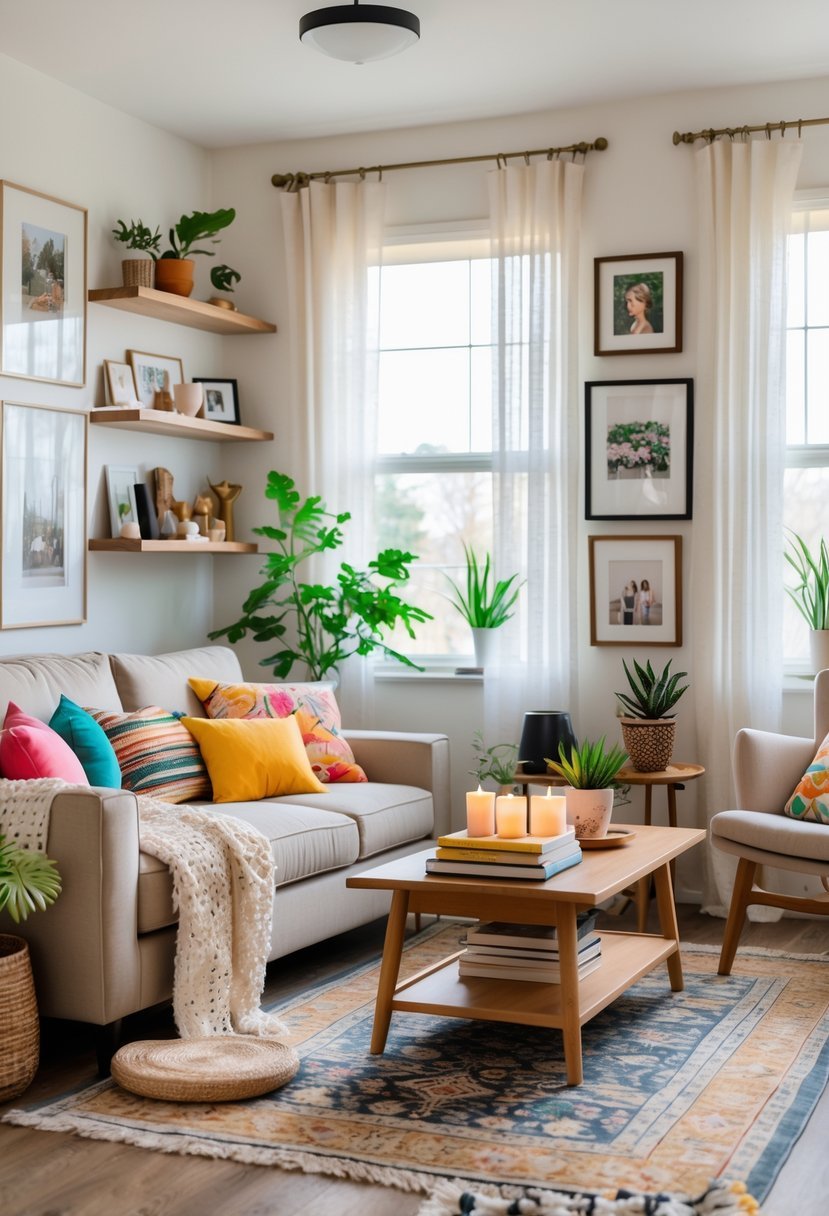
Personal items and thoughtful displays make a living room feel like you actually live there. Pick a few things that matter to you and put them somewhere you’ll see them every day.
Showcasing Meaningful Art
Choose art that means something—maybe it reminds you of a trip, a person, or just a good time. Family photos look neater if you stick to a couple frame styles, though you can mix up the sizes for some interest.
Originals from local artists add a bit of story and support people in your area. Hang art at eye level—about 57–60 inches from the floor to the center works for most folks.
Mix it up: a canvas, a sketch, maybe a little sculpture if you’re feeling it. Rotate pieces now and then, or after something big happens in your life, just to keep things feeling new.
It’s not a bad idea to jot down where or when you got a piece—on a shelf label or behind the frame—so you don’t forget why you love it.
Unique Display Strategies
They can spark interest just by mixing up heights and layers. Start with something big—a wide console mirror works—then toss in medium things like vases or a stack of books.
Finish with smaller accents. Maybe a framed photo, a candle, or that quirky travel token you picked up last summer.
Trays help corral little things so the whole setup doesn’t look chaotic.
Shelving needs some breathing room—don’t cram every inch. Try grouping in threes, and stick to just a couple of colors.
On the walls, you could go wild with a salon-style gallery, or maybe just one oversized piece if you want the room to feel a bit calmer.
Lighting? Oh, it makes a difference. Pop on a picture light or angle a lamp to spotlight your favorites.

Pingback: Home Decor for Wedding: Elegant At-Home Celebration
Pingback: Laundry Room Ideas: Stylish, Functional Layout Guide
Pingback: Home Decor Ideas Bathroom: 7 Best Stylish Retreat (Guide)
Pingback: Home Decor Gifts: 7 Best Picks They’ll Actually Love
Pingback: Home Decor Ideas: 7 Simple Ways to Refresh Every Room
Pingback: Your Living Room Was “Fine”—Then I Went Full Maximalist (11 Ideas That Feel Designer-Luxury) - Flavinto
Pingback: That Plain Living Room Wall Needed Plants — 10 Accent Wall Ideas That Actually Work - Flavinto
Pingback: Home Decor Ideas Bedroom: 17 Best Small-Space Furniture